IELTS Developing An Idea: Explain It, Don't Just Mention It
Your ideas are relevant, but each one stops after a sentence and a half. Learn five moves that turn a claim into a paragraph a reader can follow, even one who disagrees. Benchmarked to IELTS Band 6 to 7, useful whether or not you take the test.
From An Idea To A Developed Idea
Chapter 1
Chapter 1 · Start here
From An Idea To A Developed Idea
Take a claim you already have and carry it through four further moves, so a reader who disagrees can still follow why you made it.

Sprint 1
What "Developed" Actually Means
Tell a paragraph that lists ideas from one that develops one, and name the moves a paragraph is missing.

Sprint 2
The Reason Behind The Claim
Give the reason behind a claim, and tell a real reason from the same claim in other words.

Sprint 3
The Mechanism
Explain step by step how your reason leads to your claim, the move most paragraphs leave out.

Sprint 4
The Example That Earns Its Place
Give a specific example that shows how it works, not a general sentence that repeats the claim.

Sprint 5
So What Follows
End a paragraph with what follows from your idea, not the same claim again.

Sprint 6
One Idea Deep, Not Three Shallow
Cut three thin ideas down to one well-explained idea, and stop thinking more ideas means more content.

Sprint 7
Develop The Idea, No Hints
Fix paragraphs where nothing tells you which move is missing, then build a full paragraph from a bare claim.
Every Part Of The Task
Chapter 2
Chapter 2 · Start here
Every Part Of The Task
Check your finished answer against the question, and find the part you covered thinly or not at all.

Sprint 8
The Two-Part Question
Find both parts of a two-part question in your finished answer, and check each one has its own developed paragraph.

Sprint 9
Both Views And Your Own
Answer a discuss-both-views question with both views and your own opinion, which is not optional.

Sprint 10
The Part Hidden Inside The Question
Find the parts of a question hidden in single words like extent, why, whether and who.
Sprint 11
Equal Coverage, Unequal Space
Give every part of the question a real answer, even if some parts are shorter, and tell thin from short.

Sprint 12
The Part You Answered Twice
Spot two paragraphs making the same point in different words, and turn one into the part of the question you missed.
Sprint 13
The Ninety-Second Coverage Check
A quick routine that finds an unanswered part of the question in a finished essay in under two minutes.
Sprint 14
Cover The Whole Question, No Hints
Check and fix finished answers where nothing tells you which part is missing.
A Position You Can Hold
Chapter 3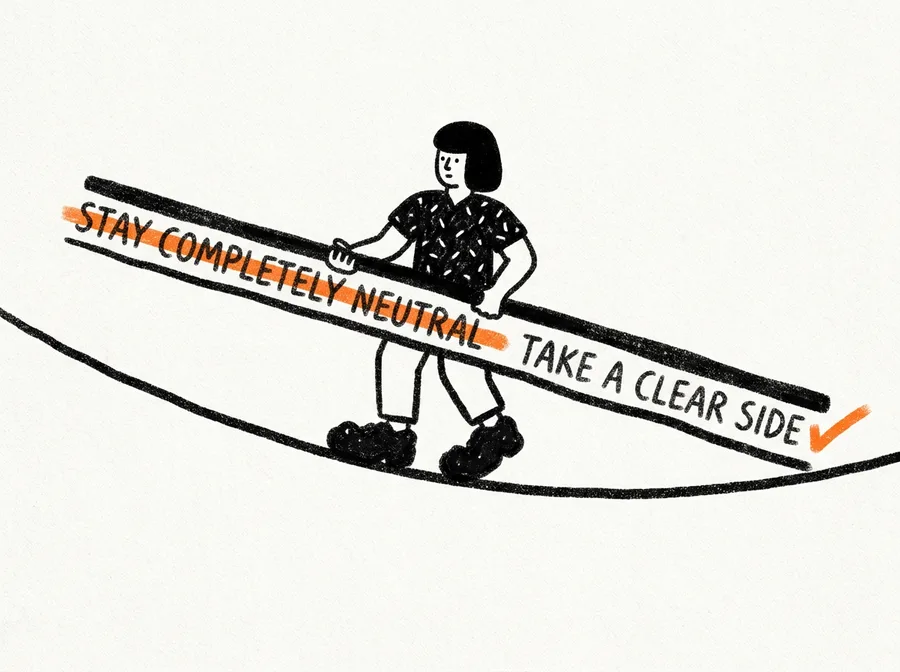
Chapter 3 · Start here
A Position You Can Hold
State your position in the introduction, show it in every body paragraph, and confirm it at the end without repeating yourself.

Sprint 15
Saying It In The Introduction
End your introduction with a position specific enough that someone could disagree with it.

Sprint 16
The Same Position In Every Paragraph
Make every body paragraph clearly serve your position, not just stay on topic.

Sprint 17
Where The Position Drifts
Find the sentence where your essay stopped arguing what it said it would, usually in the second body paragraph or the conclusion.
Sprint 18
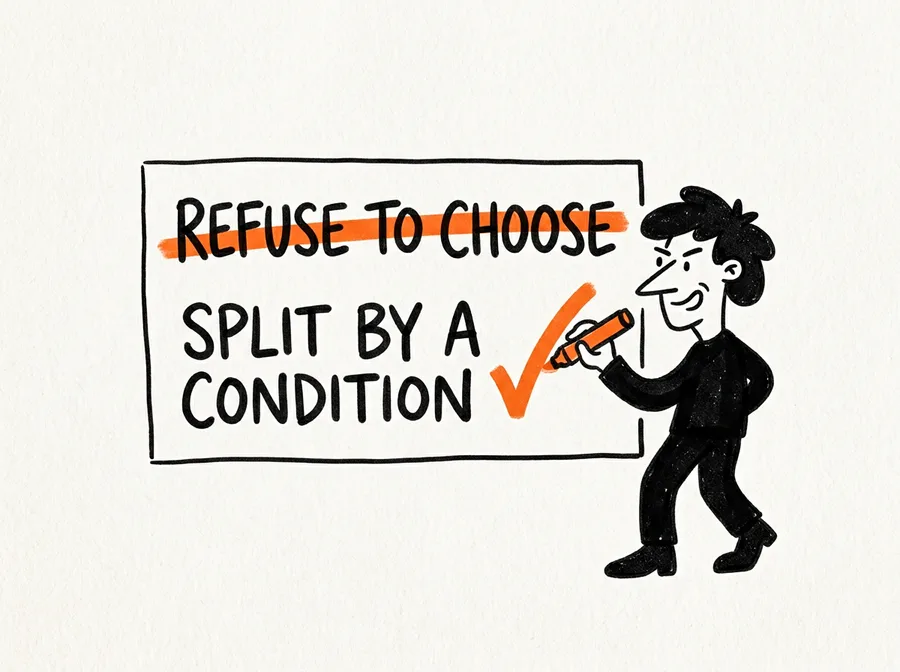
Refusing To Choose
Take a position even on a question that feels balanced, and tell a careful position from no position.
Sprint 19
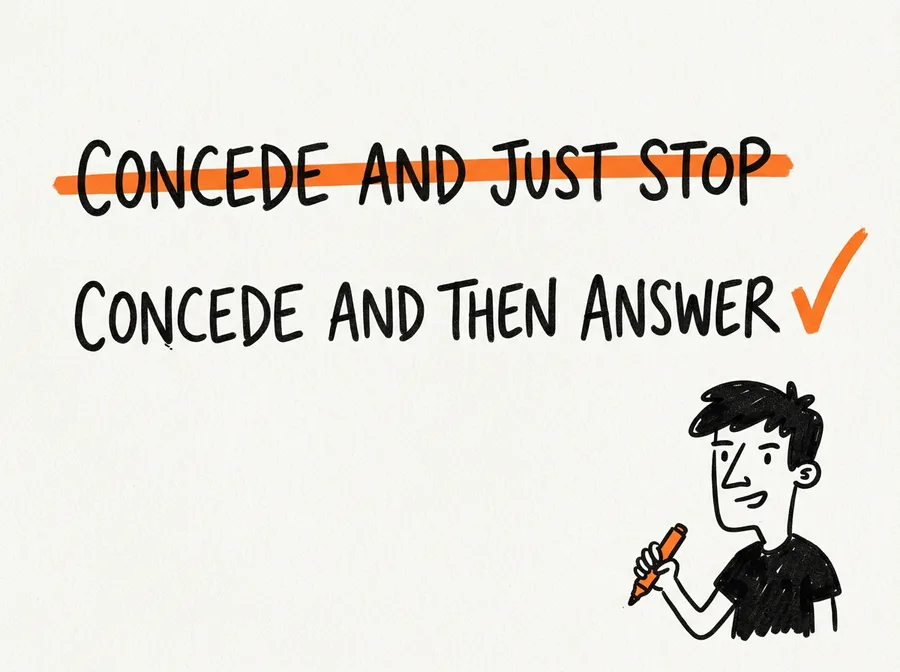
Conceding Without Switching Sides
Admit the strongest point against you, then explain why your position still stands.

Sprint 20
A Conclusion That Adds Something
Write a conclusion that restates your position and adds one thing, a condition, a result or a suggestion, without starting a new argument.

Sprint 21
Fix The Position, No Hints
Find and fix whatever position problem an essay has, with nothing telling you which.
Support That Holds
Chapter 4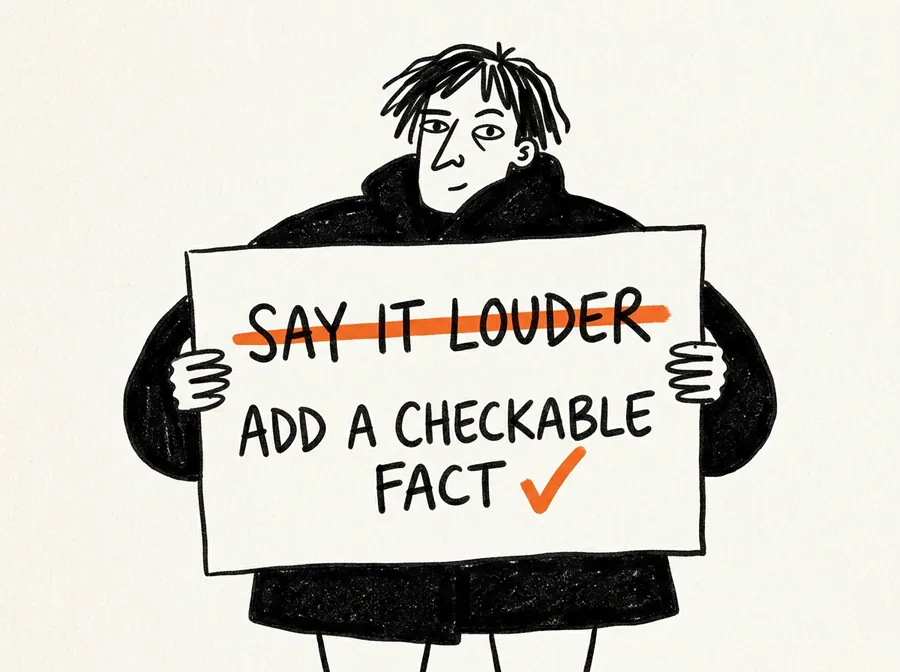
Chapter 4 · Start here
Support That Holds
Support a claim with something a doubtful reader would accept, not a louder version of the same claim.

Sprint 22
Support, Or Just A Louder Claim
Tell real support from the same claim said louder, and give the real thing.

Sprint 23
The Personal Example
Use a personal example where it shows how something works, and know when it is too narrow to carry the claim.

Sprint 24
All, Every, Always
Narrow a claim to what your support can carry, so one counter-example can't knock it down.

Sprint 25
The Statistic You Invented
Replace made-up statistics with support that needs no source, and stop writing according to a recent study.

Sprint 26
Support That Wandered
Check that each support sentence backs the claim you actually made, not a nearby one the paragraph drifted into.

Sprint 27
Making A Claim You Can Actually Support
Write your claim after you know what support you have, instead of making a claim and hunting for support.

Sprint 28
Fix The Support, No Hints
Fix support problems with nothing telling you which one is there, including when the claim itself must change.
The Whole Response
Chapter 5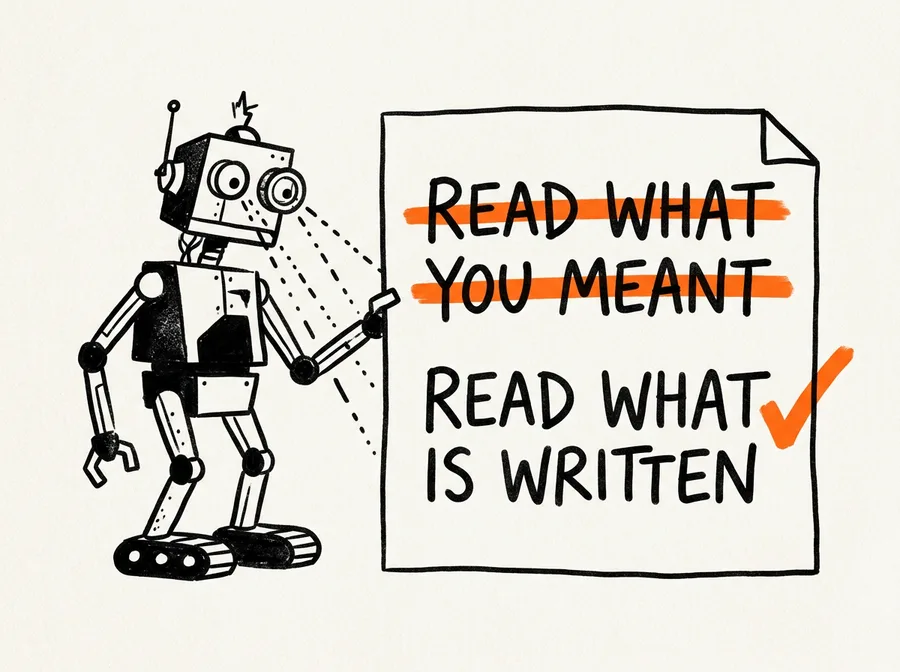
Chapter 5 · Start here
The Whole Response
Check a finished essay in the minutes you actually have, find the one fault that costs most, and fix that one.

Sprint 29
Reading Your Own Essay As A Stranger
Read your own essay for what is on the page, not what you meant, using checks that don't depend on judgement.

Sprint 30
The Fault That Costs Most
Rank the problems you found by how much each one costs, and fix the most expensive one first.

Sprint 31
The Paragraph That Went Thin
Find the thinnest paragraph in a finished essay without being told which, and add the one move it is missing.

Sprint 32
The Two Faults You Repeat
Name the two problems you personally repeat, and the check that catches each one.

Sprint 33
Developing Under Time
Write a developed body paragraph in seven minutes, deciding how it works before you start writing.

Sprint 34
Depth Beats A Better Idea
Choose the idea you can explain fully over the one you find most interesting.

Sprint 35
Course Review — One Full Response
Write a full essay and get a report on every problem this course covers, with the lesson that fixes each.