IELTS Collocation: Use The Words That Belong Together
Stop collecting impressive words. Learn which verb belongs with which noun, how register changes between Writing and Speaking, how near-synonyms differ in strength, and which memorised phrases examiners discount on sight.
Better Verbs Than Show, Affect And Say
Chapter 1
Chapter 1 · Start here
Better Verbs Than Show, Affect And Say
Replace the overworked verbs that mark a Band 6 script, and learn what they collocate with.

Sprint 1
Show, Indicate, Reveal
Pick a verb whose strength matches the evidence, instead of writing show every time.

Sprint 2
Affect, Shape, Undermine
Neutral verbs like affect versus verbs that push one way, like undermine, so affect stops being your only choice.

Sprint 3
Argue, Claim, Maintain
Report other people's views with verbs that show how much you agree, instead of say and think all the way through.

Sprint 4
Approach, Mechanism, Measure
Name the parts of an argument, like approach and measure, instead of way and thing, with the right small words around each.

Sprint 5
The Collocation Spine
Eight common word pairs you learn as one piece, because the verb in each cannot be swapped for another.

Sprint 6
Review: The Precision Core
Everything from this chapter in one place. Test yourself, find your weakest group of verbs, and write one Task 2 paragraph.
Describing Data And Change
Chapter 2
Chapter 2 · Start here
Describing Data And Change
Match trend verbs to the line, adverbs to the verb, and approximations to the number.

Sprint 7
Rise, Plummet, Plateau
Choose a trend verb that matches how steep the line really is, and learn which ones never take an object.

Sprint 8
Sharply, Steadily, Marginally
Academic test only. Pair an adverb with a trend verb without contradicting it, and use the adjective form correctly.

Sprint 9
Approximately, Just Under, In Excess Of
Ways to say about without repeating it, and how to put each one on the correct side of the number.

Sprint 10
Proportion And Comparison
Academic test only. Describe proportions and compare several figures accurately, including sentences with respectively.

Sprint 11
Peaks, Troughs And Periods
Academic test only. Describe a chart by its highs, lows and periods instead of walking through every year.

Sprint 12
Review: Describing The Line
All the chart words from this chapter. Test yourself, then write a short summary of the main trends in a chart.
Making And Defending An Argument
Chapter 3
Chapter 3 · Start here
Making And Defending An Argument
Hedge so a claim survives a counter-example, and concede without losing the argument.

Sprint 13
Hedging And Certainty
Scale a claim to the evidence you actually have, so it survives the counter-example an examiner is looking for.

Sprint 14
Concession And Counter-Argument
Concede a point and then pivot, producing the two-part structure every discuss-both-views essay needs.

Sprint 15
Emphasis And Prioritisation
Signal which of several reasons matters most, instead of presenting them all as equally weighted.

Sprint 16
Evaluating Arguments
Judge an argument in precise terms rather than calling it good or bad, and know which adjectives collocate with argument, evidence and claim.

Sprint 17
Proposing And Recommending
Propose solutions with verbs that name the actual policy mechanism, replacing the vague claim that the government should do something.

Sprint 18
Review: Holding A Position
All the argument words from this chapter. Test yourself, then write a paragraph that weighs both views.
Cause, Effect And Consequence
Chapter 4
Chapter 4 · Start here
Cause, Effect And Consequence
Name the causal relationship precisely: causing, worsening, easing, depending.

Sprint 19
Causing And Arising
Control the direction of causal verbs, so cause and effect are never swapped by an incorrect verb pattern.

Sprint 20
Naming The Consequence
Name consequences precisely enough to distinguish a direct outcome from a secondary or unintended one.

Sprint 21
Worsening And Risk
Describe deterioration precisely — making a problem worse is not the same as making it spread — and control the transitivity split that causes most errors here.
Sprint 22
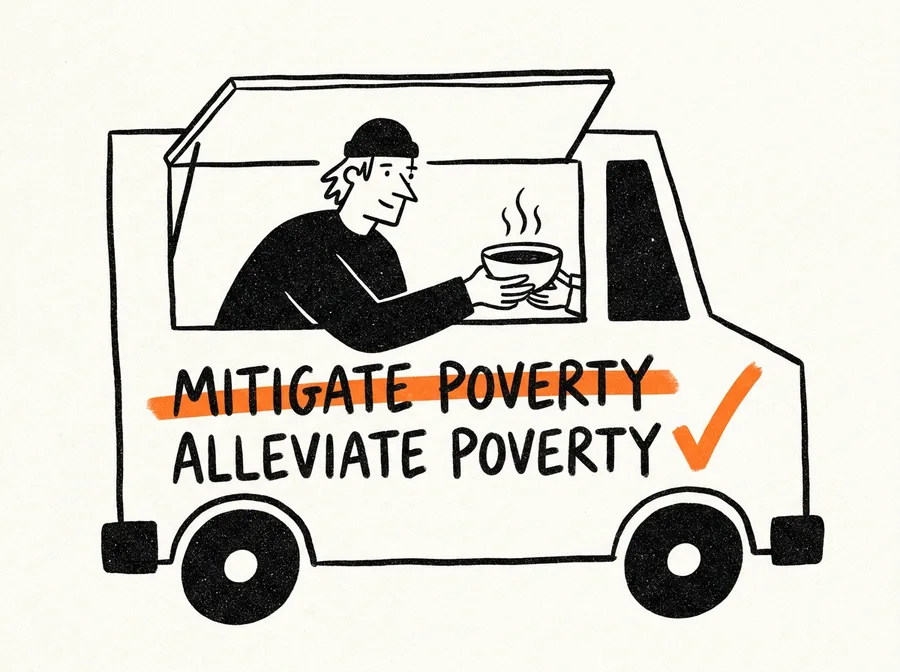
Easing And Mitigating
Distinguish reducing a problem from solving it — the single most useful hedging move available in a Task 2 solution paragraph.

Sprint 23
Condition And Dependency
Express conditions with structures beyond if — one of the fastest routes to grammatical range without risking accuracy.

Sprint 24
Review: Pointing The Arrow
All the cause-and-effect words from this chapter. Test yourself, then write a problem-and-solution paragraph.
Spotting Paraphrase In Reading And Listening
Chapter 5
Chapter 5 · Start here
Spotting Paraphrase In Reading And Listening
The paraphrase devices IELTS Reading and Listening rely on, including buried negation.

Sprint 25
Size And Frequency Synonyms
Recognise the size and frequency synonyms IELTS Reading uses to disguise a match between the question and the passage.

Sprint 26
Nominalisation
Recognise the verb-to-noun shift IELTS Reading uses to restructure sentences, and perform it in Writing for density.

Sprint 27
Signposting In Listening
Hear a discourse marker and predict what the speaker will do next — the main mechanism for surviving Listening Section 4.

Sprint 28
Negation And Limitation Traps
Spot negation buried inside a word rather than carried by not — the mechanism behind most False and Not Given errors.

Sprint 29
Writer Attitude And Tone
Identify the writer's stance from vocabulary choice — what Matching Features and writer-view questions actually test.

Sprint 30
Review: Reading What Is Actually There
All the paraphrase patterns from this chapter. Test yourself on what a passage really says, and what it does not.
Topic Words: Environment, Technology, Health, Education, Cities
Chapter 6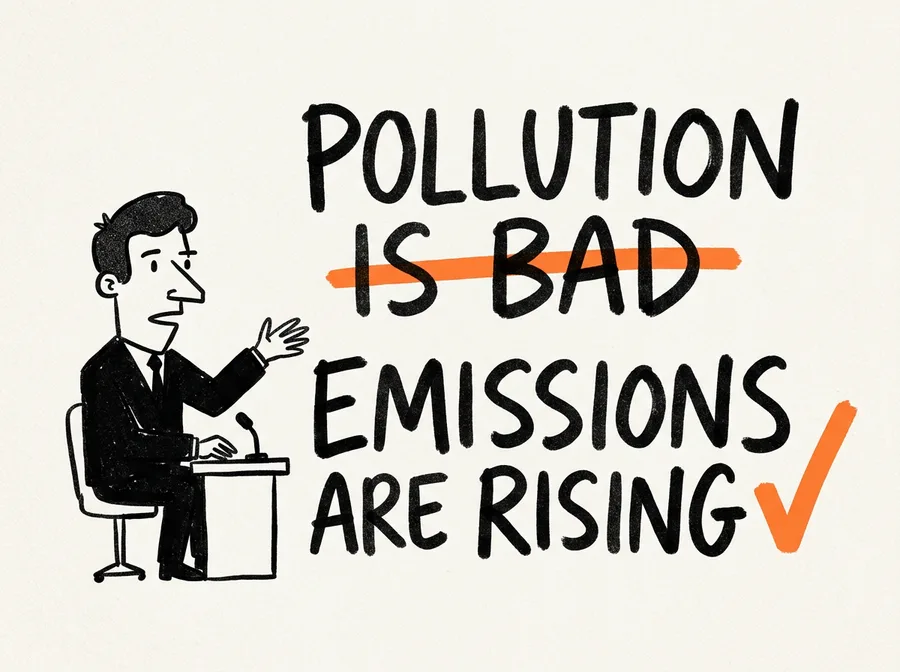
Chapter 6 · Start here
Topic Words: Environment, Technology, Health, Education, Cities
Precise vocabulary for the five themes that dominate Task 2 and Speaking Part 3.

Sprint 31
Environment And Sustainability
Use environmental terms precisely enough to make a specific argument, rather than decorating a general one.

Sprint 32
Technology And Automation
Discuss technology's social effects with terms that name mechanisms, avoiding the generic technology essay every Band 6 candidate writes.

Sprint 33
Health And Lifestyle
Discuss public health with population-level vocabulary rather than personal-health vocabulary.

Sprint 34
Education And Employment
Name the specific parts of an education or employment system, replacing the undifferentiated studies and job.

Sprint 35
Urbanisation And Society
Discuss cities and social structure with terms that name specific pressures, and understand why the two topics travel together in IELTS prompts.

Sprint 36
Review: Specific Enough To Disagree With
All the topic words from this chapter. Test yourself, then write a paragraph specific enough that someone could disagree with it.
Sounding Natural: Formal, Informal And Phrases To Avoid
Chapter 7
Chapter 7 · Start here
Sounding Natural: Formal, Informal And Phrases To Avoid
Set register per task, and remove the memorised phrases examiners discount.

Sprint 37
Formal And Informal Registers
Match register to task, understanding that over-formality in Speaking costs marks just as informality in Writing does.

Sprint 38
Speaking Naturalness
Acquire the small connective phrases that make spoken English sound unrehearsed, and buy thinking time without silence.

Sprint 39
Safe Idiomatic Language
Use the ordinary phrasal language Band 7 calls less common lexical items, while avoiding the decorative proverbs candidates mistake for idiom.

Sprint 40
The Avoid List
Identify the memorised phrases examiners discount, and replace each with content that carries meaning.

Sprint 41
Precision Under Pressure
Separate the word pairs Band 6.5 candidates confuse under time pressure, closing the last common source of lexical inaccuracy.

Sprint 42
Course Review: Everything You Now Control
Everything from the course in one place. Find your weakest area and decide what to revise before the exam.

Sprint 43
Review: Sounding Like Yourself
All the words from this chapter. Test yourself, then write the same idea twice: once for Speaking, once for an essay.