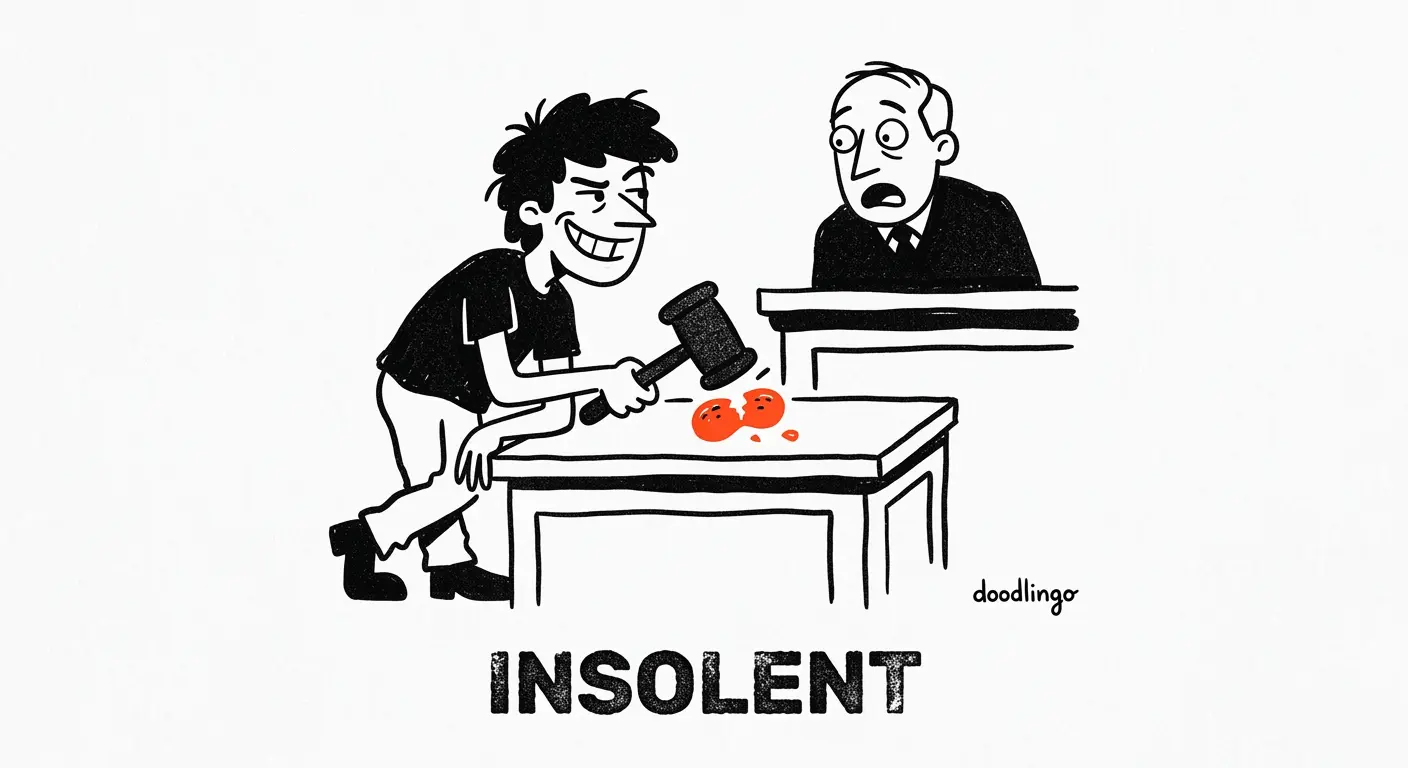
insolent
what it means
Insolent is rudeness with a position underneath it. Plain rudeness can be an accident — a tired person, a badly chosen word. Insolence is aimed. It is what a reply sounds like when someone has decided that the person in front of them does not have to be respected, and lets them hear it. That is why it is nearly always used upwards in a structure: a student to a teacher, a junior officer to a senior one. The word's older sense was not according to custom, which fits exactly — an insolent remark breaks the unwritten rule about who gets deference, and everyone in the room hears the rule break.
Insolent es una grosería con una postura detrás. La grosería normal puede ser un descuido; la insolencia va dirigida: es lo que suena cuando alguien ha decidido que a esa persona no hace falta respetarla, y se lo deja oír. Su sentido antiguo era «contra la costumbre», y encaja: rompe la regla no escrita de a quién se debe respeto.
Insolent é grosseria com uma posição por trás. A grosseria comum pode ser descuido; a insolência é dirigida: é o som de alguém que decidiu que aquela pessoa não precisa ser respeitada — e faz questão de que ela ouça. O sentido antigo era "fora do costume", e serve: quebra a regra não escrita sobre quem merece respeito.
Insolent, c'est une grossièreté avec une position derrière. La grossièreté ordinaire peut être une maladresse ; l'insolence, elle, vise : c'est le ton de quelqu'un qui a décidé qu'on n'a pas à respecter la personne en face, et qui le lui fait entendre. Le sens ancien était « contraire à la coutume » — la règle non écrite du respect, brisée.
Insolent adalah kekasaran yang punya sikap di baliknya. Kasar biasa bisa karena lengah; insolence itu terarah: begitulah bunyinya ketika seseorang memutuskan bahwa orang di depannya tidak perlu dihormati, dan sengaja memperdengarkannya. Arti lamanya "menyalahi kebiasaan" — persis: aturan tak tertulis soal siapa yang dihormati, dilanggar.
Insolent, arkasında bir tavır olan kabalıktır. Sıradan kabalık dalgınlıktan olabilir; küstahlık nişan alır: karşısındakine saygı göstermeye gerek olmadığına karar vermiş birinin sesidir ve bunu ona duyurmak ister. Eski anlamı "âdete aykırı" idi — kime saygı gösterileceğine dair yazılmamış kural, çiğnenir.
insolent とは、後ろに立場のある無礼です。ふつうの無礼はうっかりでも起きますが、insolence は狙っています。「この相手には敬意を払わなくてよい」と決めた人の口調で、しかもそれを相手に聞かせます。古い意味は「慣習に反する」——誰に敬意を払うかという、書かれていない決まりを破るのです。
- 01
adjective
rude in a way that shows no respect, on purpose
“His insolent remark silenced the whole room.”
- 02
noun
insolence — behaviour of that kind
“She was sent out of the class for insolence.”
Get the 10-word book — free. This word and nine like it, as a printable PDF.
Use it in a sentence.
Write one line with insolent. You get a score, the one thing that would fix it, and your own sentence written sharper. The five best hold the wall.
Sign in with Google to post — your sentence rides along.
No one holds this wall yet. Be the first.
More from The Doodle Dictionary — Vol. 1