Ganita Prakash: Class 7 Mathematics, Part 1 (NCERT)
NCERT's Class 7 Mathematics textbook, Ganita Prakash: explore numbers, algebra, geometry, fractions and computational thinking through everyday situations, stories, puzzles and activities. Notice patterns, try different approaches, and build ideas for yourself instead of just memorising steps.
Large Numbers Around Us
Chapter 1
Chapter 1 · Start here
Large Numbers Around Us
Lakhs, crores, millions and billions: how to read, write, compare and estimate really big numbers.
Sprint 1
The Indian System And The Land Of Tens
Read and write lakhs with the Indian comma system, and break big numbers into place values.

Sprint 2
Crores And Billions: Indian Vs International
Convert between lakhs and crores and millions and billions.

Sprint 3
Exact And Approximate Values
When to round a big number up or down, and how to estimate sums and differences.
Sprint 4
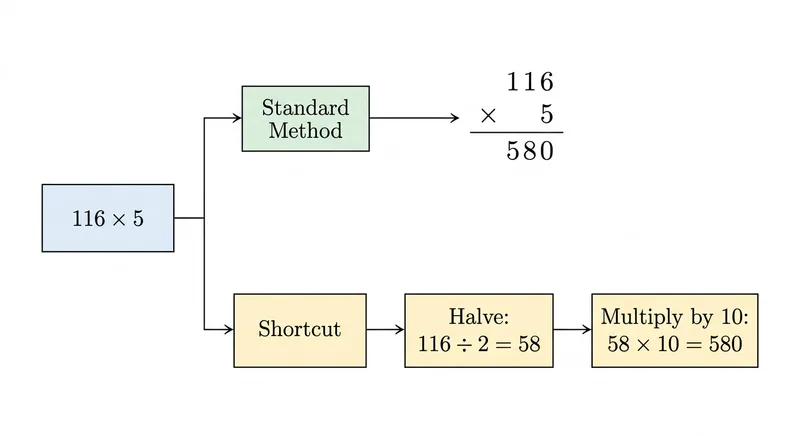
Patterns In Products
Shortcuts for multiplying big numbers, using patterns and factors.

Sprint 5
Fascinating Facts And Big Estimates
Use big numbers to estimate real-world puzzles, like fitting a whole city into buses.
Sprint 6
Review: Large Numbers Around Us
Put reading, estimating and multiplying big numbers together, and test yourself.
Arithmetic Expressions
Chapter 2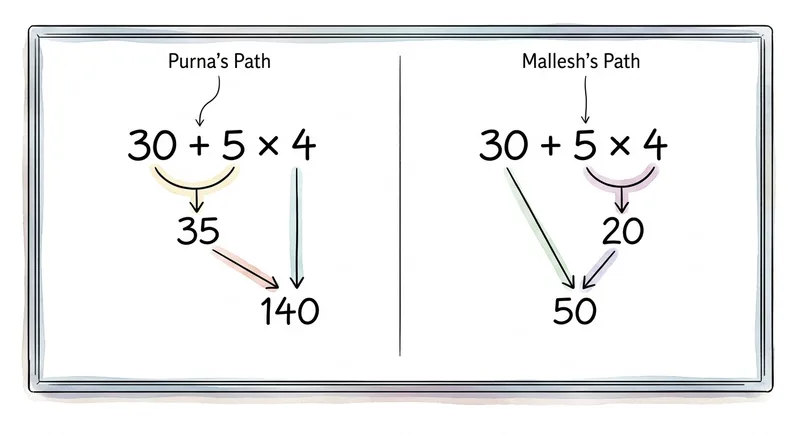
Chapter 2 · Start here
Arithmetic Expressions
How to read and simplify expressions, and why brackets and order matter.
Sprint 7
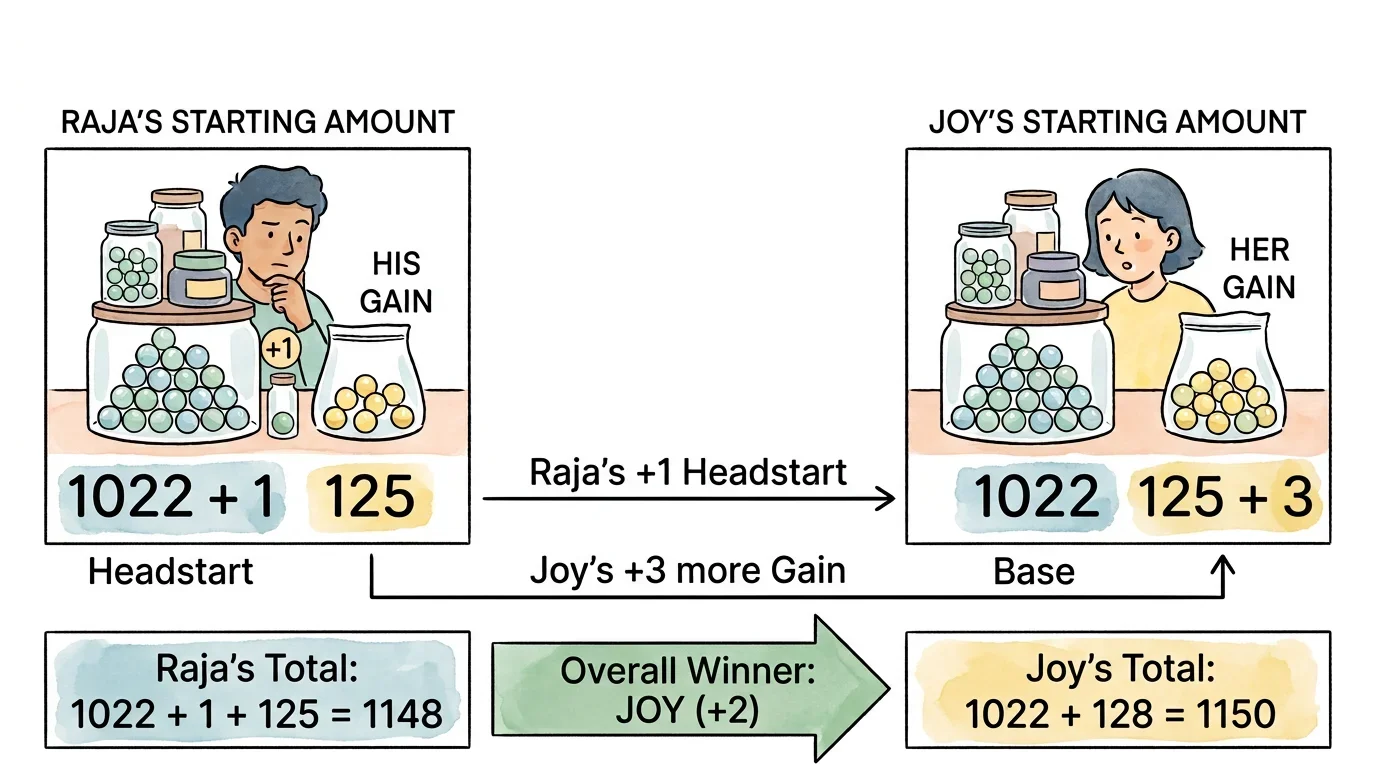
Simple Expressions And Comparing
Understand that expressions represent values, and we can compare them logically without full calculation.

Sprint 8
Brackets And Ambiguity
Recognize that brackets act as punctuation in mathematics to dictate the exact order of evaluation.

Sprint 9
Terms In Expressions
Define terms as parts of an expression separated by a plus sign, converting subtractions to additions of inverses.

Sprint 10
Swapping And Grouping Properties
Learn that terms can be added in any order (Commutative) and grouped in any way (Associative) without changing the value.

Sprint 11
Removing Brackets—I
Understand that removing brackets preceded by a negative sign flips the signs of all terms inside.
Sprint 12
Tinker The Terms I
Deduce how increasing or decreasing a single term impacts the overall value of the expression without full recalculation.

Sprint 13
Removing Brackets—II (Distributive Property)
Understand and apply the distributive property to evaluate expressions efficiently.
Sprint 14
Chapter Review: Arithmetic Expressions
Synthesize the properties of expressions, terms, and brackets to fluidly read and manipulate mathematical phrases.
A Peek Beyond The Point
Chapter 3
Chapter 3 · Start here
A Peek Beyond The Point
Smaller units, and how decimals let you measure more precisely.

Sprint 15
A Tenth Part
Understand the tenth part of a unit and how to add/subtract measurements represented as fractions out of 10.

Sprint 16
A Hundredth Part
Subdivide tenths into hundredths and perform mixed-fraction arithmetic on hundredths.

Sprint 17
Decimal Place Value And Notation
Introduce the decimal point as a natural extension of the Indian place value system.

Sprint 18
Units Of Measurement
Apply decimals to real-world measurement conversions (length, weight, money).

Sprint 19
Locating And Comparing Decimals
Visualize decimals on a number line and compare them by place value from left to right.

Sprint 20
Addition And Subtraction Of Decimals
Perform vertical addition and subtraction with decimals by aligning place values.
Sprint 21
Chapter Review: Decimals
Synthesize fractional conversion, decimal place value, comparison, and arithmetic.
Expressions Using Letter-Numbers
Chapter 4
Chapter 4 · Start here
Expressions Using Letter-Numbers
Use letters to stand for numbers, and write patterns you can't solve at a glance.

Sprint 22
The Notion Of Letter-Numbers
Learn to translate English phrases into mathematical expressions using letter-numbers (variables).
Sprint 23
Omitting The Multiplication Sign And Evaluating
Learn the convention of omitting the multiplication sign in algebra and practice evaluating expressions by substituting values.

Sprint 24
Simplifying Algebraic Expressions - Basics
Learn to identify and combine like terms to simplify expressions.

Sprint 25
Simplifying Algebraic Expressions - Advanced
Learn to use the distributive property and handle negative brackets when simplifying.

Sprint 26
Pick Patterns And Reveal Relationships
Use algebraic expressions to model and generalize geometric and numeric patterns.
Sprint 27
Chapter Review: Expressions Using Letter-Numbers
Consolidate the chapter's skills: translating, simplifying, evaluating, and applying algebraic patterns.
Parallel And Intersecting Lines
Chapter 5
Chapter 5 · Start here
Parallel And Intersecting Lines
Lines that meet and lines that never do, and the angles they make.
Sprint 28
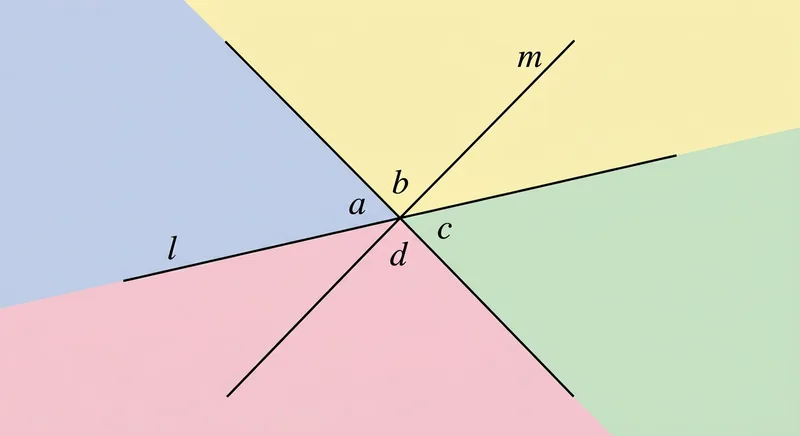
Intersecting Lines & Angles
Understand that intersecting lines create linear pairs summing to 180° and vertically opposite angles that are equal.

Sprint 29
Perpendicular Lines & Segments
Identify and define perpendicular lines as a special case of intersection where all four angles are 90°.

Sprint 30
Parallel Lines And Notations
Define parallel lines, their notation, and how they behave on a flat surface.

Sprint 31
Transversals And Corresponding Angles
Understand how a transversal line creates 8 angles, and how corresponding angles are equal if and only if the lines are parallel.

Sprint 32
Alternate And Interior Angles
Solve for alternate and interior angles using the properties of transversals over parallel lines.

Sprint 33
Chapter Review: Synthesizing Lines And Angles
Consolidate all angle relationships (linear pairs, vertically opposite, corresponding, alternate, interior) across mixed problem sets.
Number Play
Chapter 6
Chapter 6 · Start here
Number Play
Puzzles and patterns hidden in numbers.
Sprint 34
Positional Rules And Sequences
Students will decode positional logic to generate and analyze number sequences.

Sprint 35
Picking Parity: Evens And Odds
Students will derive rules for parity addition and express parity patterns algebraically.

Sprint 36
Magic Squares: The Basics
Students will understand the structural properties of 3x3 magic squares, including the magic sum and the center number.

Sprint 37
Magic Squares: Generalizing And Transforming
Students will generalize magic square structures using algebra and explore operations to create new squares.

Sprint 38
Nature's Favourite Sequence
Students will generate the Virahanka-Fibonacci sequence and apply it to combinatorics problems.

Sprint 39
Digits In Disguise (Cryptarithms)
Students will solve logic puzzles where letters replace digits in arithmetic operations.
Sprint 40
Review: Number Play
Synthesize parity rules, geometric logic in magic squares, sequence patterns, and cryptarithm problem-solving.
A Tale Of Three Intersecting Lines
Chapter 7
Chapter 7 · Start here
A Tale Of Three Intersecting Lines
Triangles: their parts, and whether any three lengths can make one.
Sprint 41
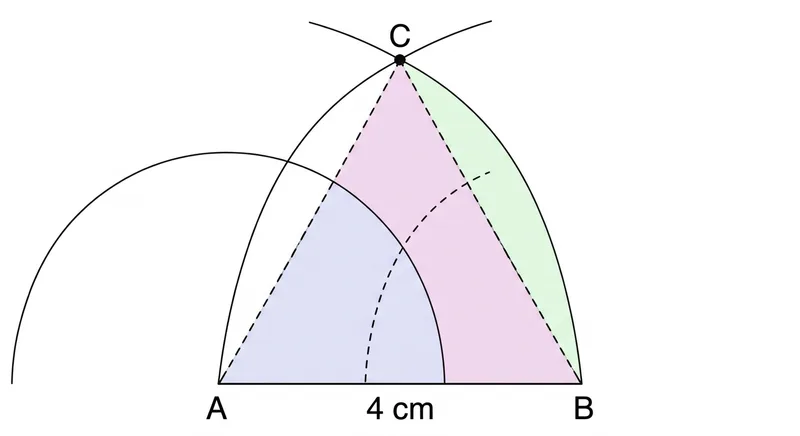
Constructing Equilateral Triangles
Learn to accurately construct an equilateral triangle using a compass and straightedge.

Sprint 42
The Triangle Inequality
Understand that the sum of any two sides of a triangle must be strictly greater than the third side.

Sprint 43
Constructing Given Sidelengths (SSS)
Learn the procedural steps to construct a triangle when three valid side lengths are known.

Sprint 44
Constructing With Angles (SAS And ASA)
Learn to construct a triangle given two sides and the included angle (SAS) or two angles and the included side (ASA).

Sprint 45
The Angle Sum & Exterior Angle Properties
Prove and apply the rule that triangle interior angles sum to 180°, and related exterior angle relations.

Sprint 46
Altitudes And Triangle Types
Define altitudes, construct them using a set square, and classify triangles by angles.
Sprint 47
Review: Intersecting Lines
Synthesize construction techniques, the triangle inequality, and angle properties to master triangle geometry.
Working With Fractions
Chapter 8
Chapter 8 · Start here
Working With Fractions
Add, subtract, multiply and divide fractions, starting with a real sharing problem.

Sprint 48
Multiplying A Fraction And A Whole Number
Understand that multiplying a fraction by a whole number means repeated addition or taking a fraction of a total amount.

Sprint 49
Multiplying Two Fractions
Understand fraction multiplication as finding a part of a part, visualized through area models.

Sprint 50
Simplifying To Lowest Form
Learn to cancel common factors before multiplying to make calculations easier.
Sprint 51
Is The Product Always Greater?
Understand the scaling effect of multiplication (multiplying by a number < 1 makes the product smaller).

Sprint 52
Division Of Fractions
Understand how to divide fractions by multiplying by the reciprocal.

Sprint 53
Word Problems Involving Fractions
Apply fraction operations to real-world and complex historical word problems.

Sprint 54
Chapter Review: Working With Fractions
Synthesize fraction arithmetic rules and apply them across varying contexts.