IELTS Sentence Accuracy: Fix The Small Errors In Every Sentence
Fix the small grammar errors that make every sentence hard work to read: articles, plurals, agreement, tense, punctuation, and checking your own writing. Not a grammar reference, just the faults that cost marks. Benchmarked to IELTS Band 5 to 6, useful whether or not you take the test.
Articles And Countability
Chapter 1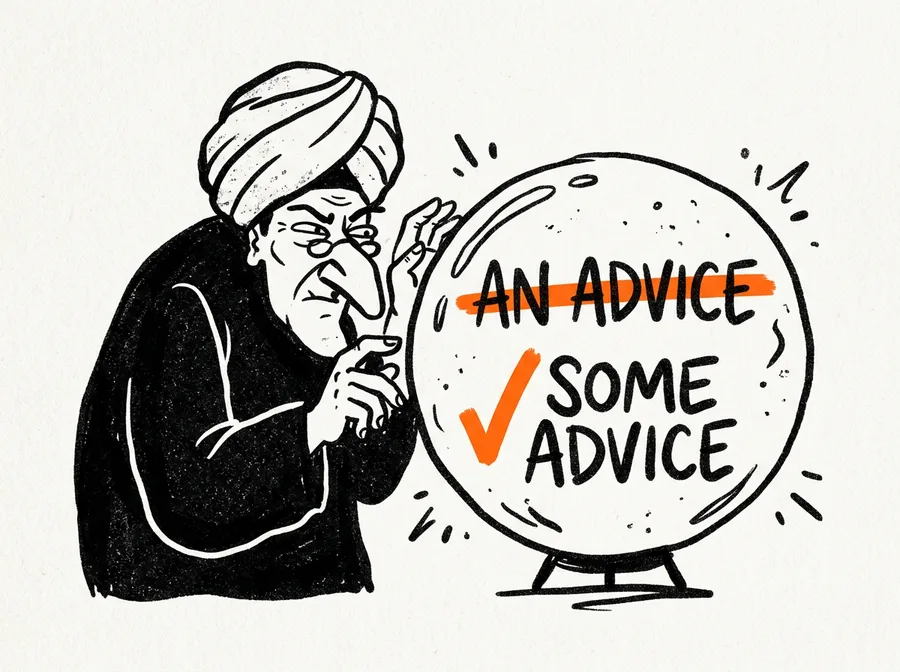
Chapter 1 · Start here
Articles And Countability
Ask whether the noun can be counted before you ask which article it takes. The second question has no answer until the first one is settled.

Sprint 1
Can You Count It?
Before you choose a, an or the, decide whether the noun can be counted. Learn the two tests that tell you.

Sprint 2
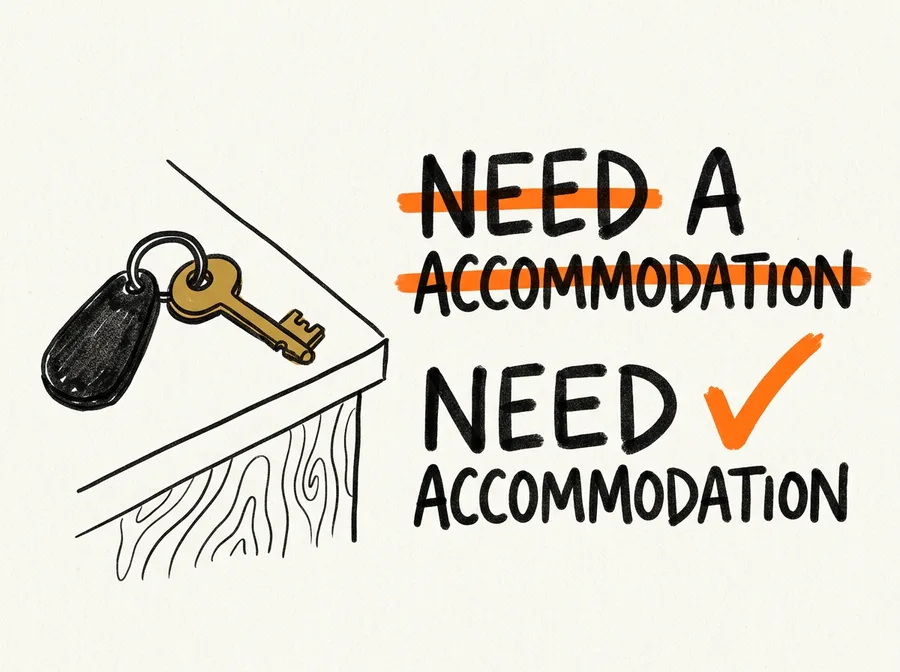
The Nouns That Look Countable And Are Not
The twelve uncountable nouns that turn up most in essays, and how to stop adding -s to them.

Sprint 3
A And An — The First Time You Mention It
Use a or an the first time you mention something, and choose between them by sound, not by letter.

Sprint 4
The — The Second Time, And The Only One
Use the when the reader knows which one you mean, and learn the two reasons they might know.

Sprint 5
No Article At All
Write general statements with no article at all, the most common case in an essay, and tell them apart from specific ones.

Sprint 6
Articles Inside Fixed Phrases
Linking phrases whose article follows no rule, learned as whole phrases.

Sprint 7
Every Article Decision At Once
Put every article rule together on a paragraph where nothing tells you which mistake to look for.
One Or Many — Number And Agreement
Chapter 2
Chapter 2 · Start here
One Or Many — Number And Agreement
One or many, and the verb that has to agree with it. The plural you left off and the plural that should not be there cost the same mark.

Sprint 8
The Plural That Should Be There
Add the plural -s after numbers, after words like many and several, and in general statements.

Sprint 9
The Plural That Should Not Be There
Take the -s off uncountable nouns and off nouns used to describe other nouns: the usual over-correction after the last lesson.

Sprint 10
This, These, Much, Many
Choose this or these, much or many, to match the noun that follows.

Sprint 11
Subject And Verb, Side By Side
Make the verb agree with a subject right next to it, in the present simple that essays run on.

Sprint 12
Subject And Verb, Far Apart
Find the real subject when other words sit between it and the verb, where longer sentences usually break.

Sprint 13
Everyone, Each, Neither
Treat everyone, each and neither as singular, and choose the right word to refer back to them.

Sprint 14
Number Across A Paragraph
Put every plural and agreement rule together on a paragraph where nothing says which mistake is there.
Keeping The Sentence In One Time
Chapter 3
Chapter 3 · Start here
Keeping The Sentence In One Time
A paragraph runs in one time. This chapter fixes the tense you chose and the tense you slipped into three sentences later.

Sprint 15
Present Simple For General Truths
Write general claims in the present simple instead of drifting into the continuous or the future.

Sprint 16
Past Simple For A Finished Story
Tell a finished story in the past simple all the way through, which is what Speaking Part 2 asks for.

Sprint 17
The Tense That Slipped
Keep one time across a sentence with two or more verbs, where longer sentences usually break.

Sprint 18
Will, Would And The Conditional Frame
Complete both halves of an if-sentence consistently, and tell a real future from an imagined one.

Sprint 19
Present Perfect — Started Before, Still True
Use the present perfect for something that started in the past and is still true, and never with finished times like yesterday.

Sprint 20
The Passive Without Losing The Tense
Form the passive without losing or doubling the tense, and learn which verbs can never be passive.

Sprint 21
One Paragraph, One Time
Keep one time across a paragraph, and change it only when the content really moves.
Where Sentences Start And Stop
Chapter 4
Chapter 4 · Start here
Where Sentences Start And Stop
Where a sentence starts and where it stops. Full stops, fragments, run-ons, commas and apostrophes — the faults an examiner sees before reading a word.

Sprint 22
Capital Letters And Full Stops
Start every sentence with a capital and end it with a full stop, even when you are writing fast.

Sprint 23
The Sentence That Never Finished
Check a group of words for a subject and a verb before you treat it as a sentence.

Sprint 24
The Sentence That Never Stopped
End a sentence where it ends, instead of joining two sentences with a comma or with nothing.

Sprint 25
The Comma After An Opener
Put a comma after an opening word or phrase, and leave it out where it isn't needed.

Sprint 26
Joining Two Clauses
Join two parts of a sentence with a word that matches how they relate, and punctuate the join correctly.

Sprint 27
Apostrophes
Use the apostrophe for short forms and for possession, and never in plurals or in its.

Sprint 28
Punctuate A Paragraph From Scratch
Add every full stop, comma and capital to a paragraph that has none.
Reading Your Own Sentence
Chapter 5
Chapter 5 · Start here
Reading Your Own Sentence
Reading your own writing as a reader would. Four questions, your own two repeated errors, and editing under exam time.

Sprint 29
The Four-Question Check
One four-question check to run over any sentence, built from everything in this course.
Sprint 30
Finding Errors In Someone Else's Writing
Find mistakes in someone else's writing first. It is easier, and it trains your eye for your own.

Sprint 31
Finding Errors In Your Own
Find mistakes in your own writing, using tricks that stop you reading what you meant instead of what you wrote.

Sprint 32
The Two Errors You Personally Repeat
Find the two mistakes you personally repeat most, and build a quick check for them.

Sprint 33
Editing Under Time
Run your two-mistake check on a paragraph in ninety seconds, about the checking time an essay leaves you.

Sprint 34
Simple And Correct Beats Complex And Broken
Choose the sentence you can control, and know when a complex sentence costs more than it earns.

Sprint 35
Course Review — A Paragraph From Scratch
Write a paragraph from scratch, check it in time, and get a report on your mistakes across the whole course.