Strategy before Mocks.
Learn what each question is testing before you race the clock. Build the reading, writing, and language skills behind a stronger score — then use mocks to prove them.
Same passage. Three ways to read it.
Top scorers don't read every word. Tap Skim to map the structure, or Scan to hunt the facts — and watch the same text change.
One 20–30 minute sprint.One exam skill you can use.
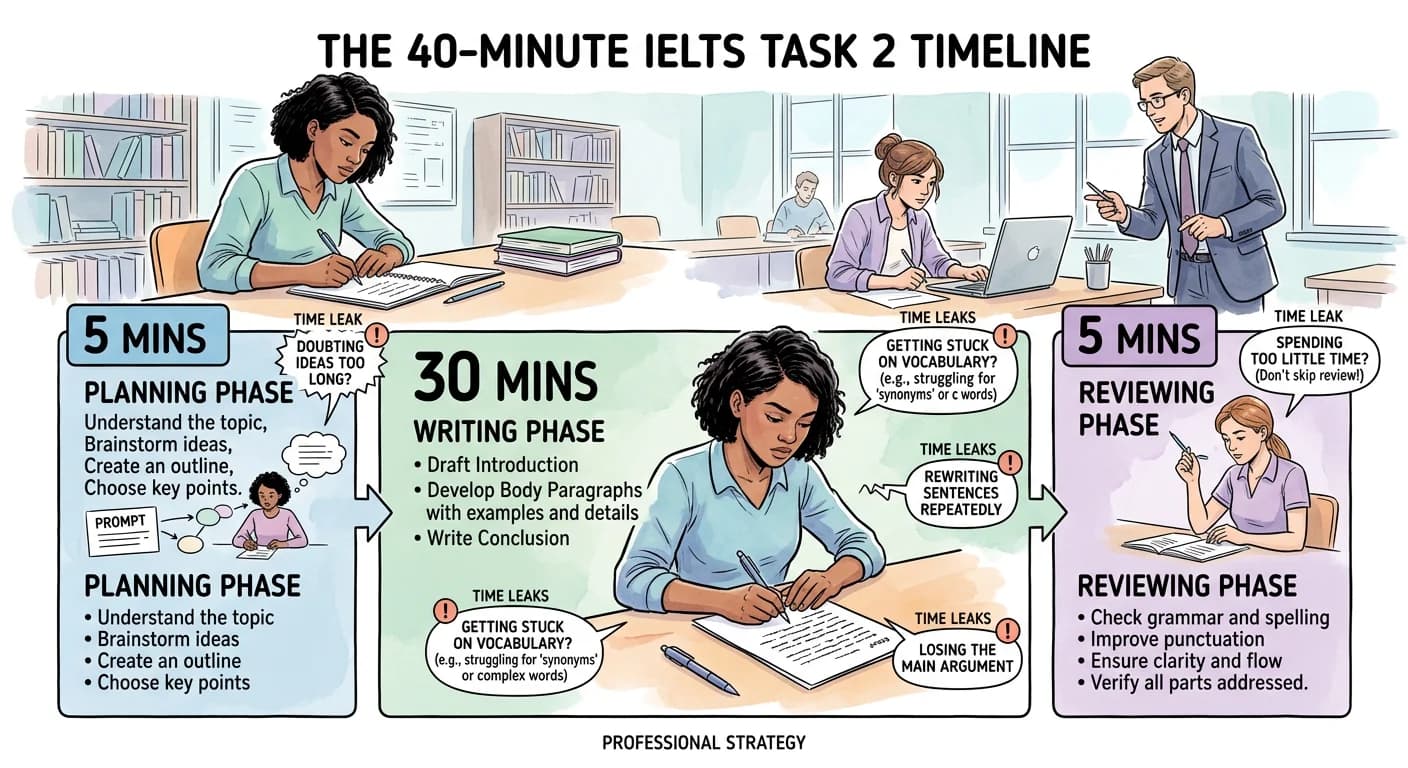
Learn the method, make the decision yourself, and get feedback before the same mistake follows you into another mock.
- 01Concept
- 02Recognise
- 03Practise
- 04Apply
See the skill clearly
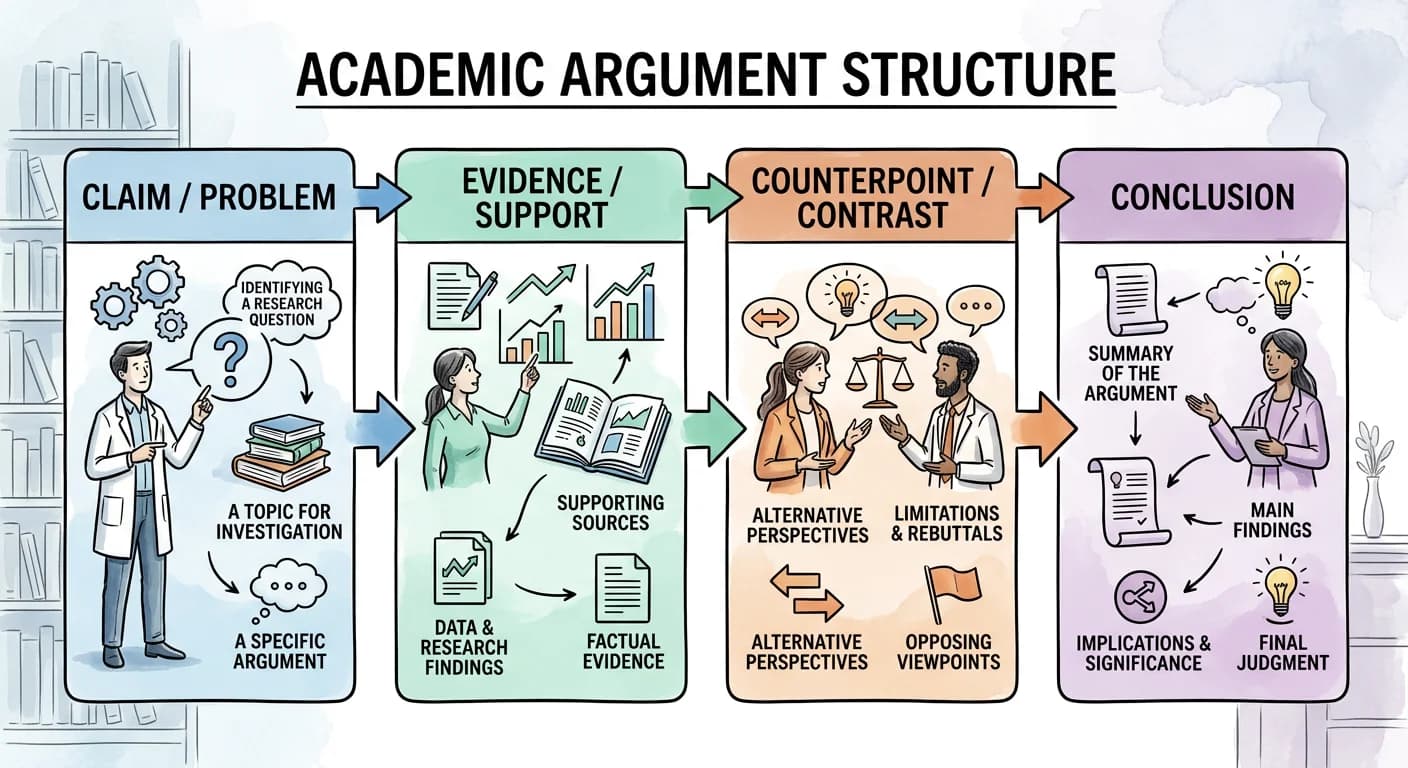
Start with a visual explanation of what the examiner is testing and what a strong answer must do.
Make the right decision
Compare strong and weak answers, identify the trap, and learn the reason behind the correct choice.
In a Task 1 report, the overview should…
Tap an answer
Practise with support
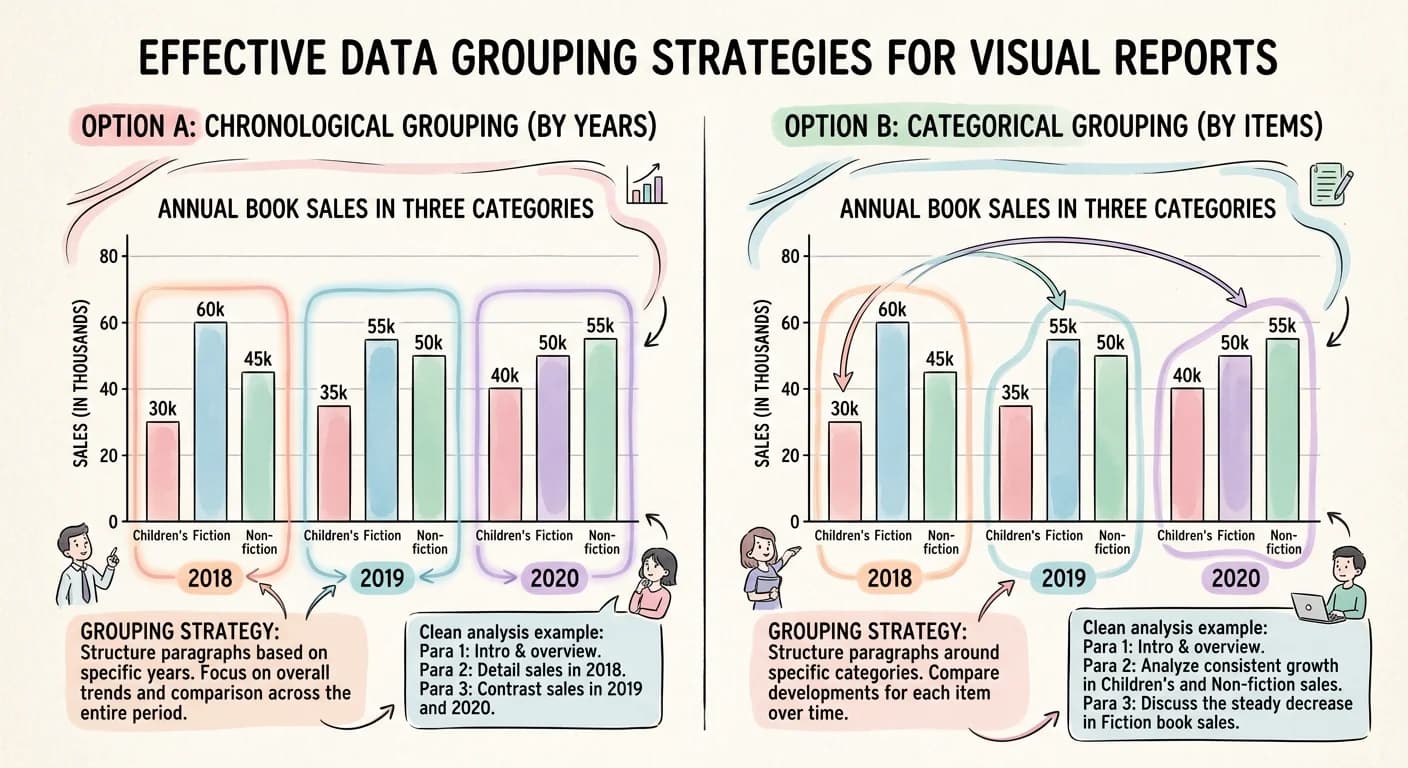
Complete the key step yourself while examples, prompts, and word banks give you just enough help.
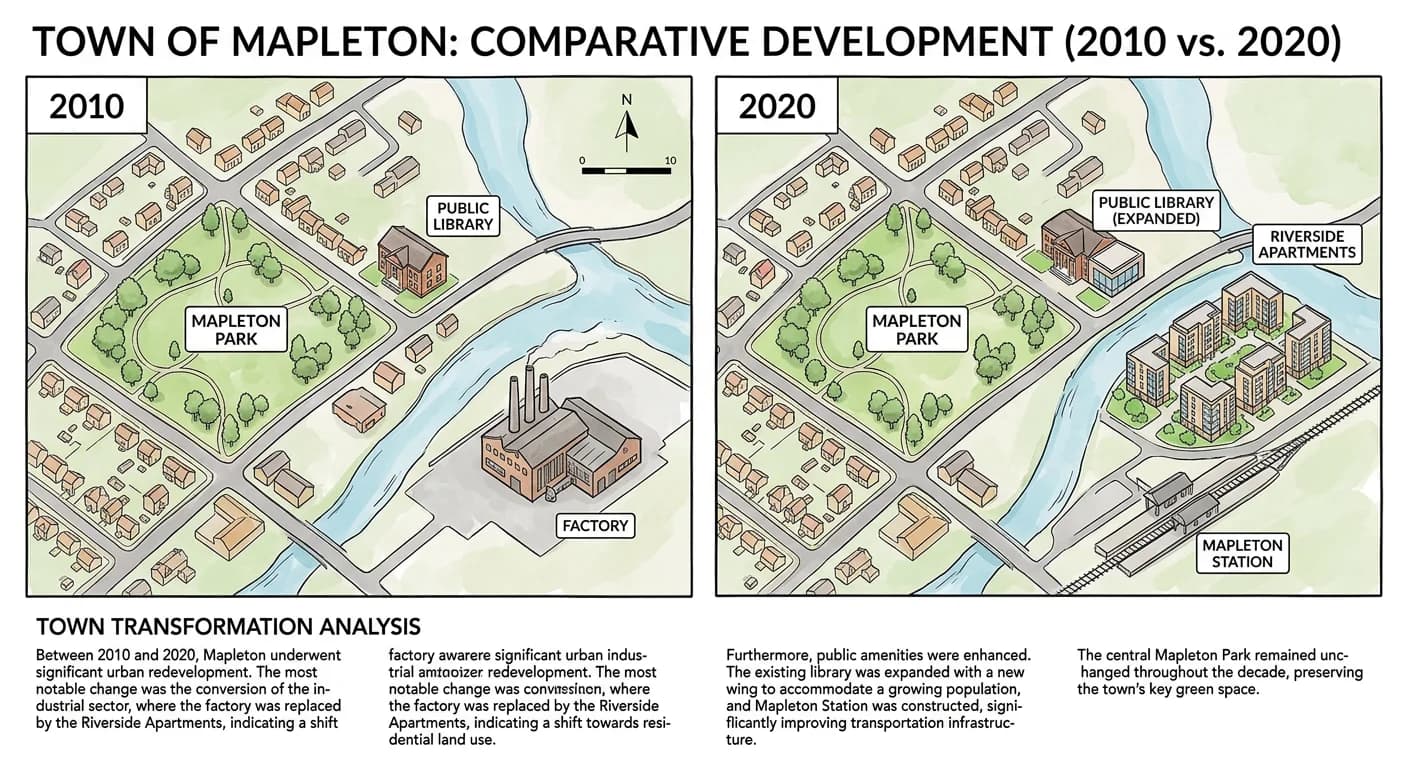
The old factory was demolished and a block of apartments was constructed to the north of the river.
Apply it and improve
Use the skill in your own answer, then get immediate feedback on what works and what to fix next.
Write a one-sentence overview
“Overall, the town became more residential — the factory was replaced by housing, while the park stayed unchanged.”
- Clear overview, no detail dump
- Groups the key changes
- Accurate comparison language
Know why an answer worksbefore the clock starts.
Reading covers passage navigation, evidence, paraphrase, question types, traps, and timing. Writing covers task analysis, ideas, structure, language, and feedback. Looking for words rather than method? The vocabulary shelf is below.
3 of 3 courses · Chapter 1 free
Three problems.Not three difficulty levels.
Word Forms, Collocation and Precision are all marked under the same criterion, but each one removes a different fault: the form errors that make a known word score as unknown, the pairings and register that leave a sentence grammatical and still wrong, and the judgement a near-synonym carries. Start where your writing actually loses marks — not at the highest band you can read.
Not sure which one is yours?
Fifteen one-tap questions find which kind of mistake is still live in your writing, then name the course. No account, nothing saved — and it can send you down a tier rather than up.
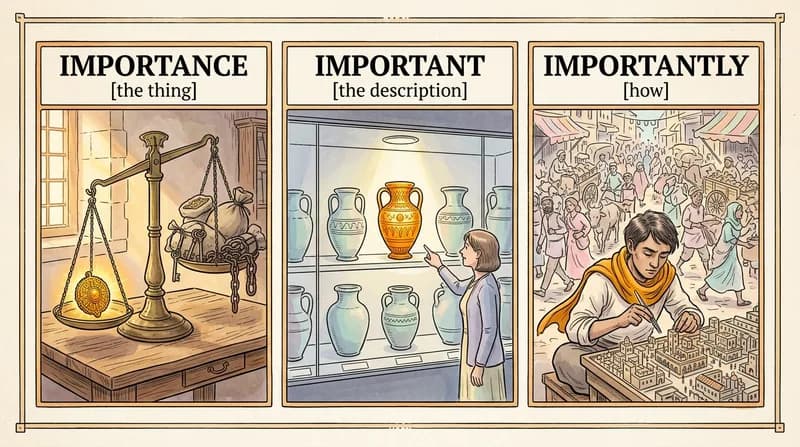
Word Forms
Stop guessing between danger and dangerous. Learn how to read the sentence slot before you choose the word, spell the academic words examiners see most, replace the five words you repeat, and remove the errors that make known words score as unknown.
Fixes · Word form & spelling
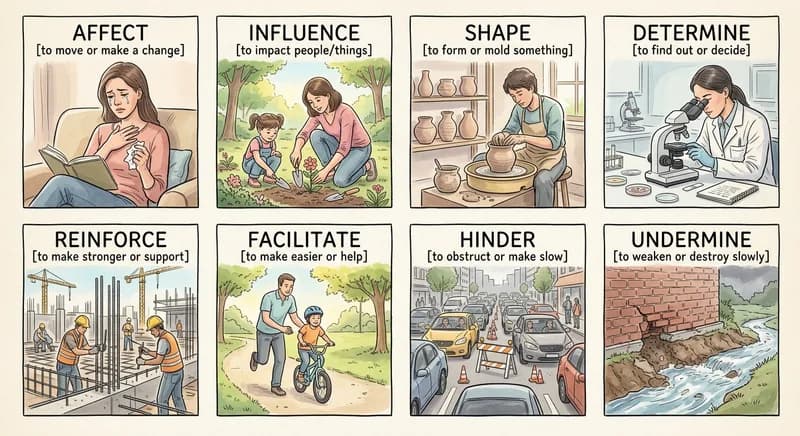
Collocation
Stop collecting impressive words. Learn which verb belongs with which noun, how register changes between Writing and Speaking, how near-synonyms differ in strength, and which memorised phrases examiners discount on sight.
Fixes · Collocation & register
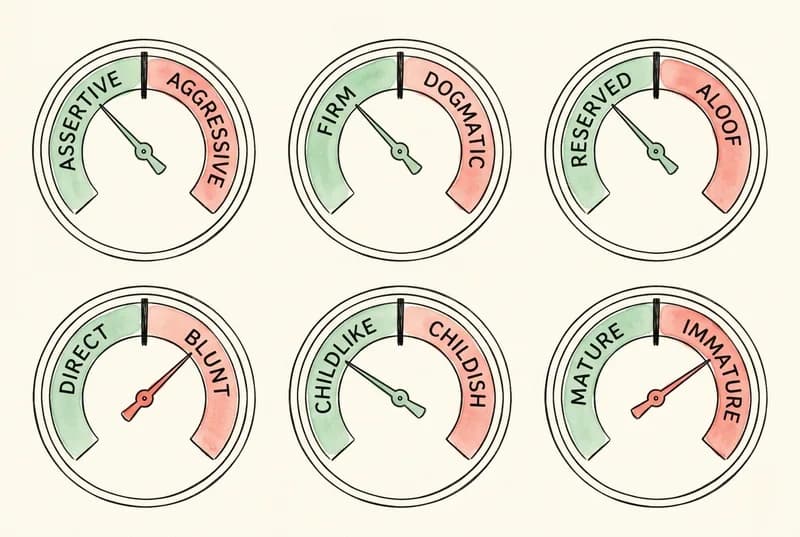
Precision
Stop reaching for rare words. Learn the judgement a near-synonym carries, the company a word keeps, the six words Band 7 candidates most confidently misuse, and when the ordinary word is the higher-scoring choice.
Fixes · Connotation & judgement
Read the question clearly. Write the answer precisely.
Go beyond memorising definitions. Learn how academic words change meaning, strengthen an argument, and improve answers across English, science, humanities, and entrance tests. All three courses cover the same seven skills, pitched up a level each time.
Not sure which level is yours?
Fifteen one-tap questions find which academic words are already solid — describing, analysing, evaluating evidence — then name the course. No account, nothing saved. The class a student sits in is a poorer guide than it looks, so this can send you down a level rather than up.
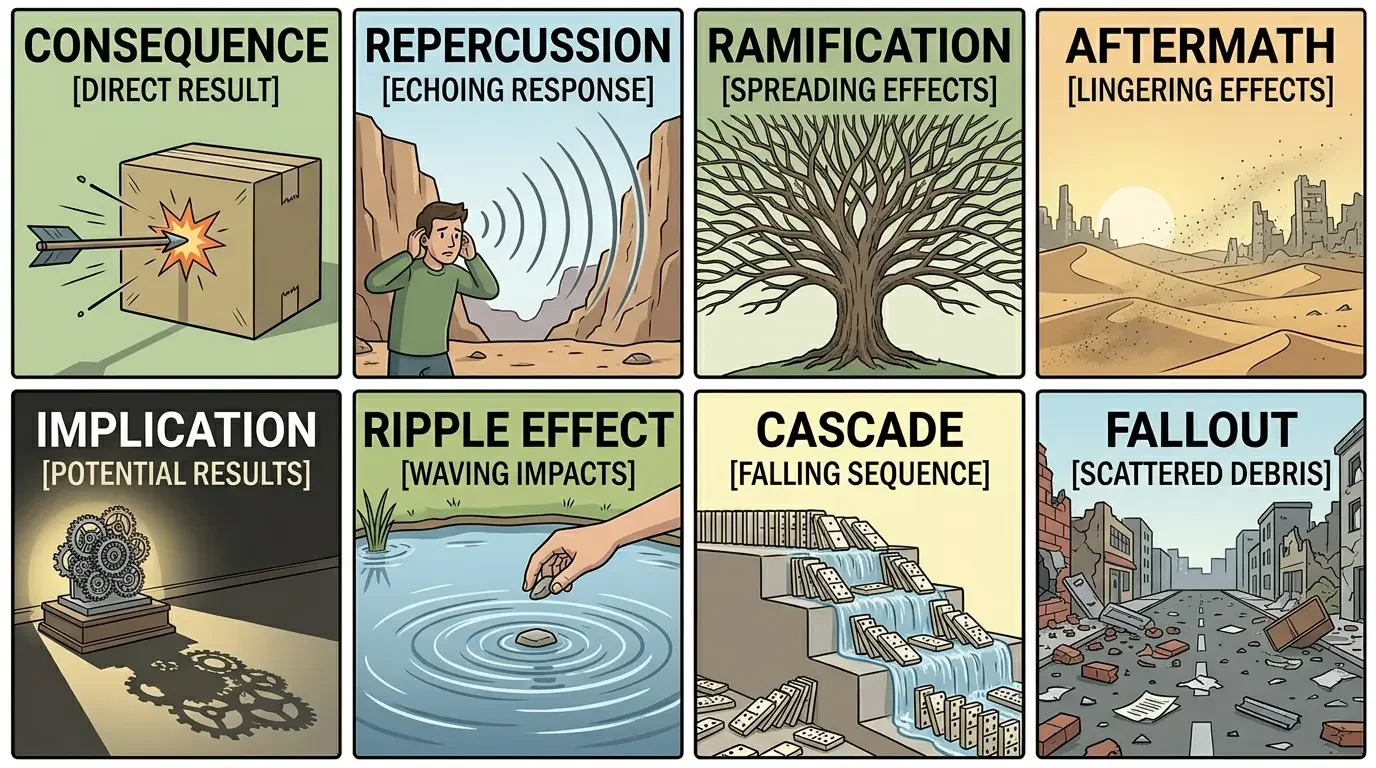
Class 9–10 Academic Vocabulary Builder
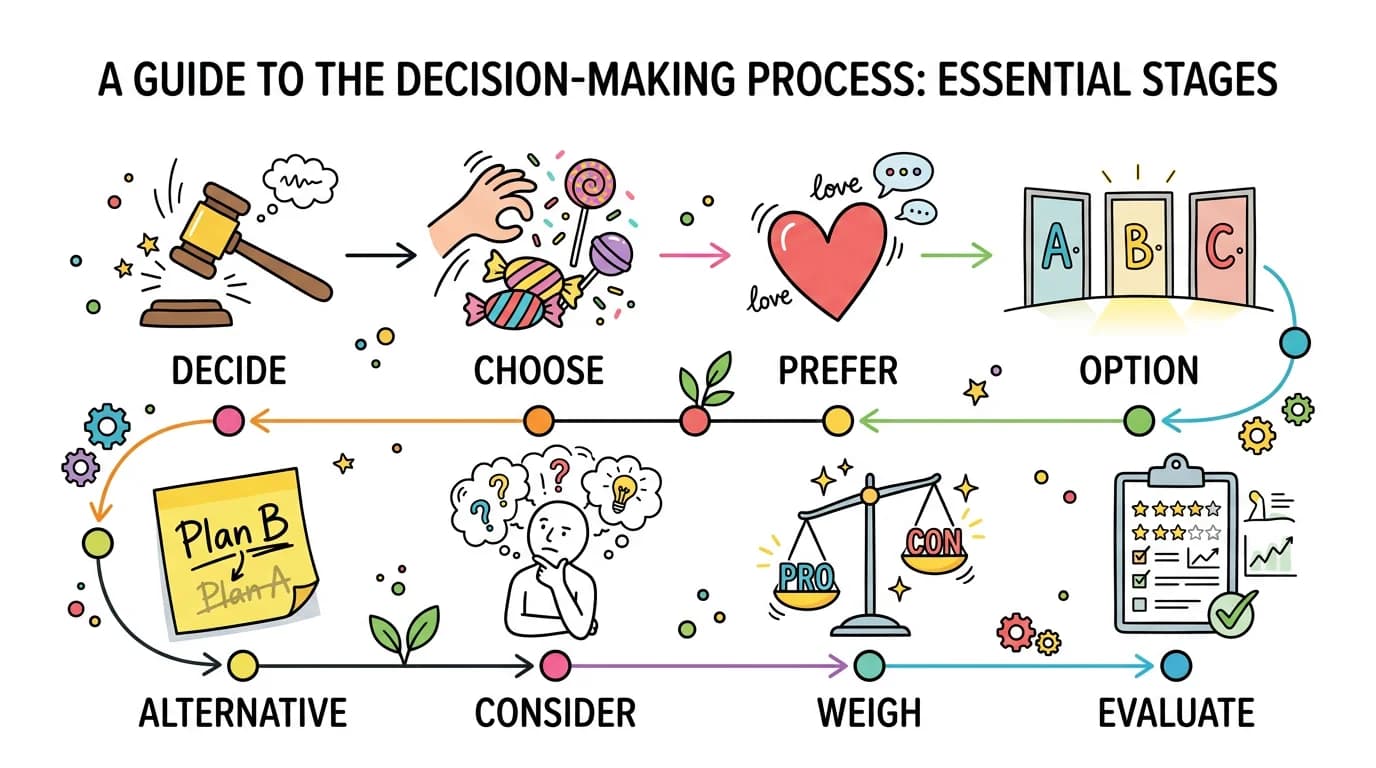
Your textbooks have levelled up. So must your vocabulary. In Class 6–8, you learned to name, describe, and compare. Now you need to ANALYSE, EVALUATE, HYPOTHESISE, ARGUE, and CRITIQUE. This course gives you the exact academic words that separate average exam answers from top-scoring ones — and trains you to use them with precision, not bluff.
Class 11–12 Academic Vocabulary Builder
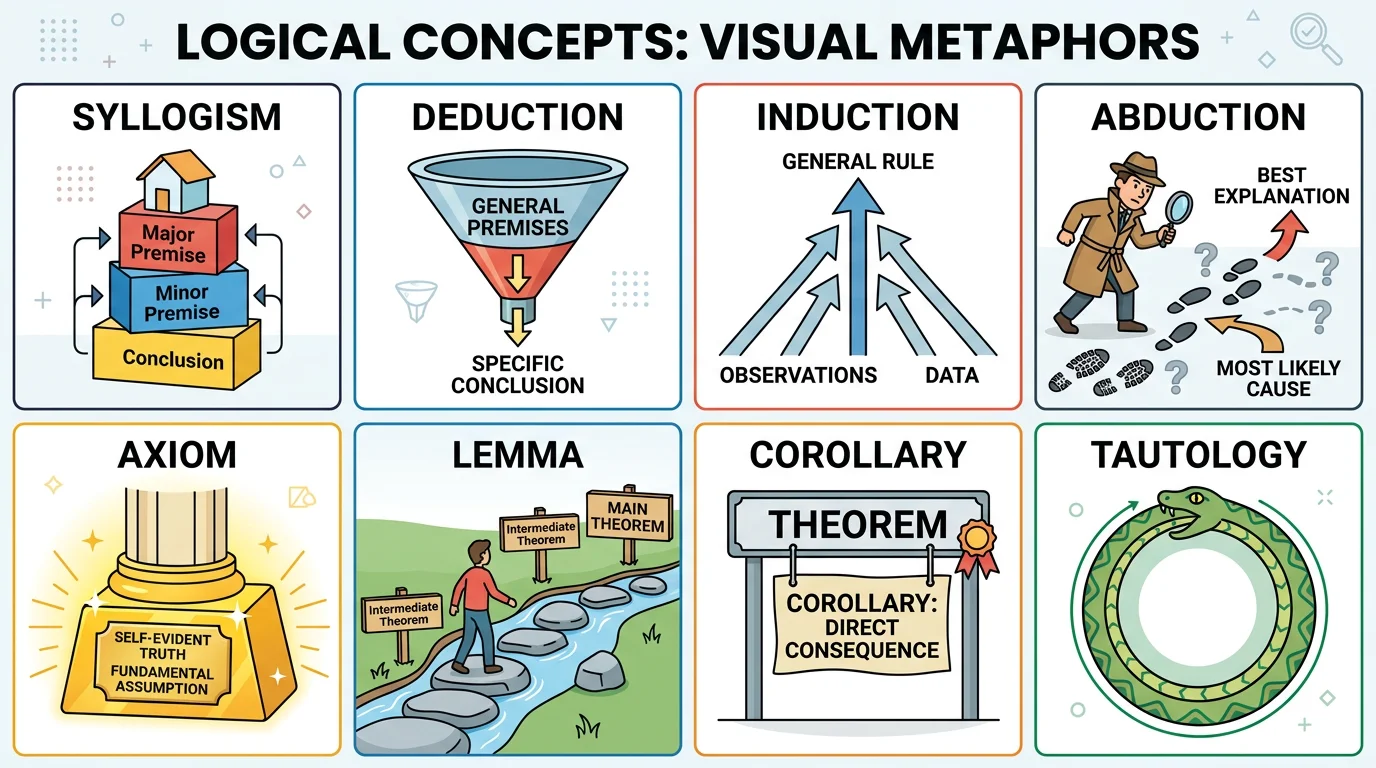
You're about to enter the world of research papers, competitive exams, university lectures, and scholarly writing. The vocabulary of that world is different — it's precise, layered, and often rooted in Latin and Greek. Words like "epistemology," "fallacy," "paradigm," and "juxtapose" aren't decorative — they're TOOLS for thinking at a level that school vocabulary can't reach. This course gives you 280 of those tools and trains you to use them like a scholar, not a student memorising synonyms.
Class 6-8 Academic Vocabulary Builder
Your textbooks and exam papers are full of words you half-know. You can read them. You can sort of guess what they mean. But can you USE them — in answers, in essays, in science reports, in arguments? This course turns "I've seen that word" into "I know exactly when to use it."
Built for learners.Recognised by teachers.

“This is such brilliant work. I simply love the graphics. Absolutely awesome, and it would surely benefit my connections.”
Louise Steenkamp
TEFL Coach

“This is amazing! I love the app. I'll spread the word to my students.”
Natalie Winslow
Founder · English Workouts
Make your next mock count.Learn the skill before you measure it.
Choose the skill holding your score back. Learn it in focused sprints, practise with feedback, and return to timed work knowing exactly what to do differently.
Bloom by Doodlingo · supported by Google & Microsoft