IELTS Writing Task 2: Answer The Question Actually Asked
Stop memorising essay templates. Learn how to read the question, build a clear position, develop ideas, write coherent paragraphs, and improve through rubric-based feedback.
Understand The Task
Chapter 1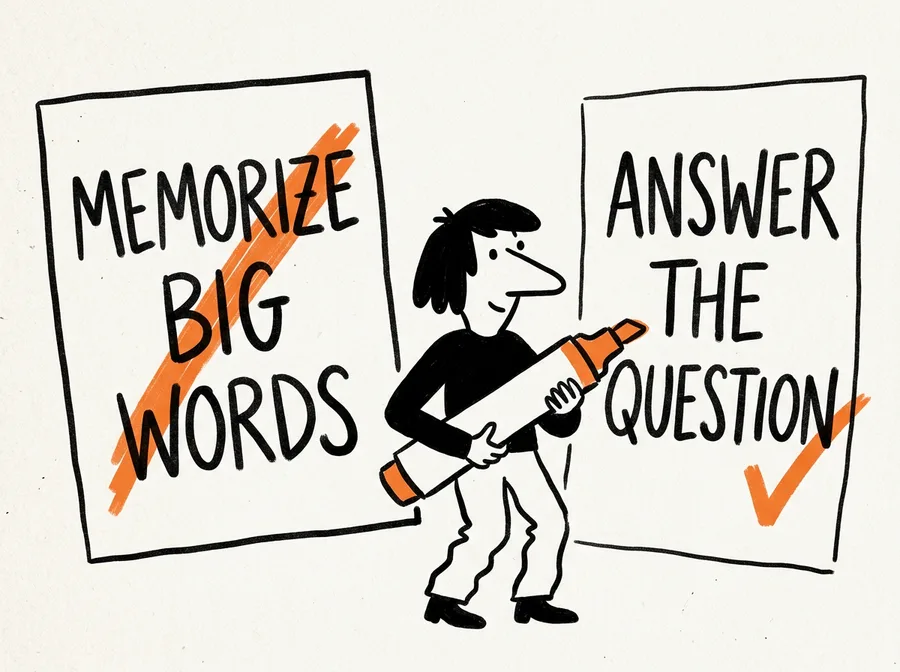
Chapter 1 · Start here
Understand The Task
See what Task 2 really rewards, before you learn the essay types.

Sprint 1
What IELTS Writing Task 2 Actually Tests
Understand the four official scoring criteria for IELTS Writing Task 2.

Sprint 2
Why Templates Fail
Recognize why memorized templates lower scores and learn to write prompt-specific responses.

Sprint 3
The 40-Minute Writing Plan
Master the 40-minute time allocation for planning, writing, and reviewing Task 2.

Sprint 4
Review: Understand The Task
Synthesize the four scoring criteria, the risks of templates, and the 40-minute writing plan.
Decode The Question
Chapter 2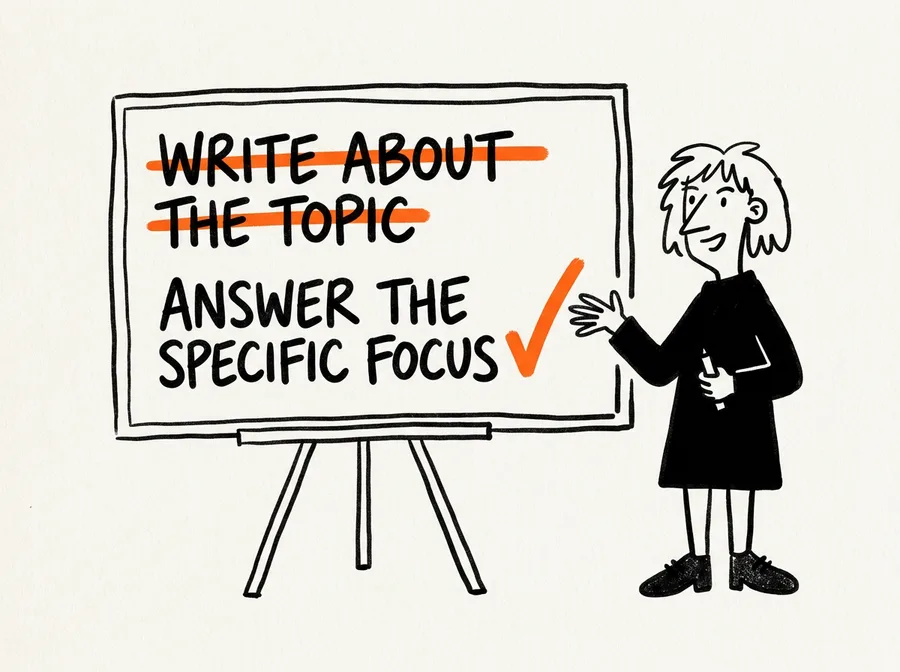
Chapter 2 · Start here
Decode The Question
Work out exactly what the question asks before you write, so you don't lose marks answering a different one.

Sprint 5
Identify The Question Type
Identify the five common Task 2 prompt families and their specific command phrases.

Sprint 6
Find All Parts Of The Question
Deconstruct a prompt into topic, focus, command, limits, and hidden contrast to ensure full Task Response.

Sprint 7
Choose A Clear Position
Formulate a clear, committed thesis statement that directly answers the prompt.
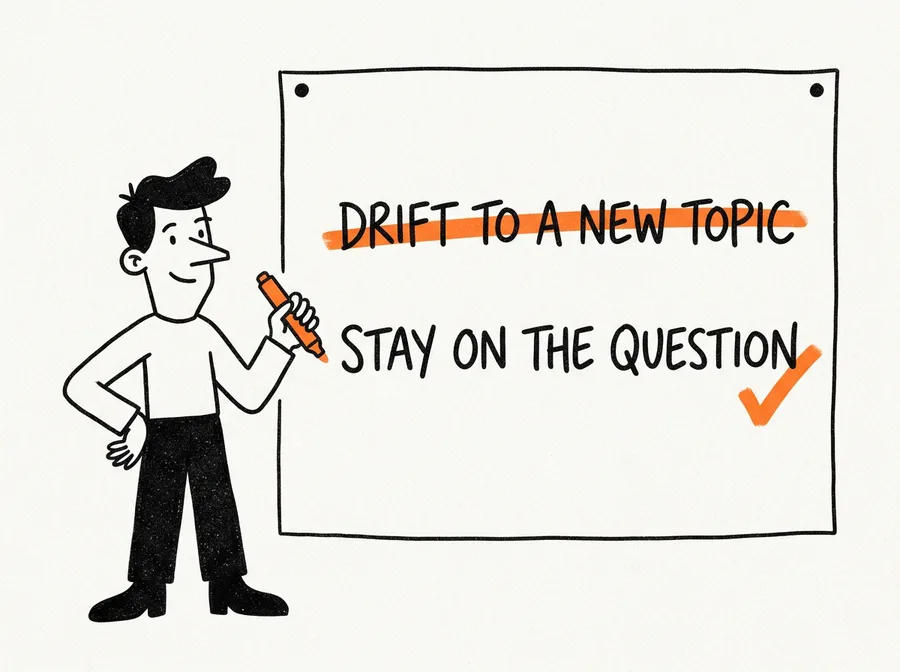
Sprint 8
Avoid Going Off-Topic
Differentiate between broad topics and narrow prompt focuses to maintain strict relevance.
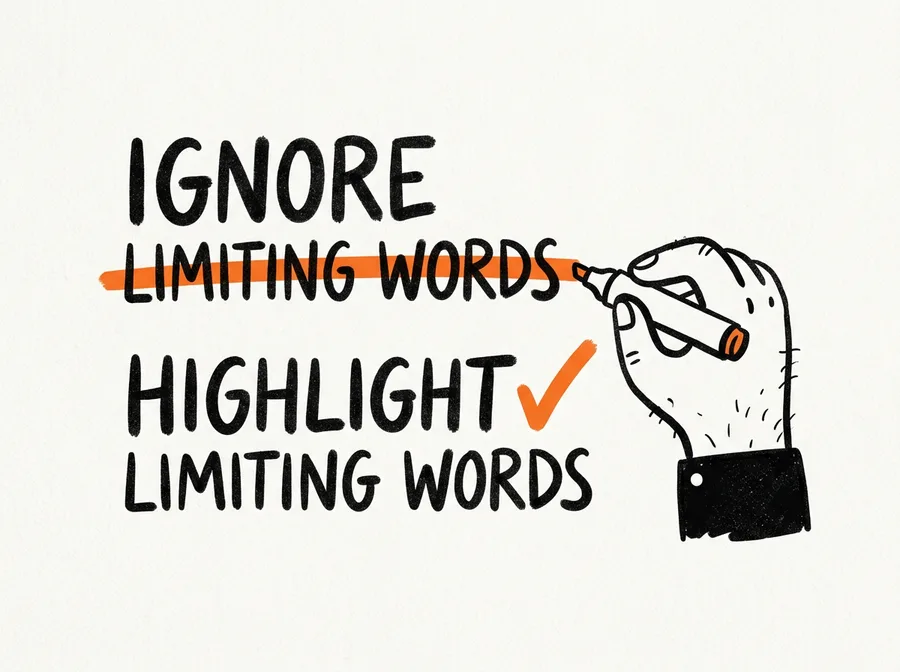
Sprint 9
Review: Decode The Question
Synthesize prompt decoding skills to consistently identify task requirements and maintain a clear position.
Build Strong Ideas
Chapter 3
Chapter 3 · Start here
Build Strong Ideas
Develop one well-supported argument instead of listing shallow, generic ideas.

Sprint 10
Build One Strong Main Idea
Build one clear main idea for a body paragraph.

Sprint 11
Explain, Don’t Just List
Explain one idea through cause, effect or how it works, instead of listing several shallow points.

Sprint 12
Use Examples Correctly
Choose examples that support your argument without taking it over.

Sprint 13
Plan Two Body Paragraphs
Plan a balanced two-paragraph essay by choosing the ideas you can develop most.

Sprint 14
Review: Build Strong Ideas
Synthesize the principles of idea generation, explanation, example usage, and paragraph planning.
Writing Each Paragraph
Chapter 4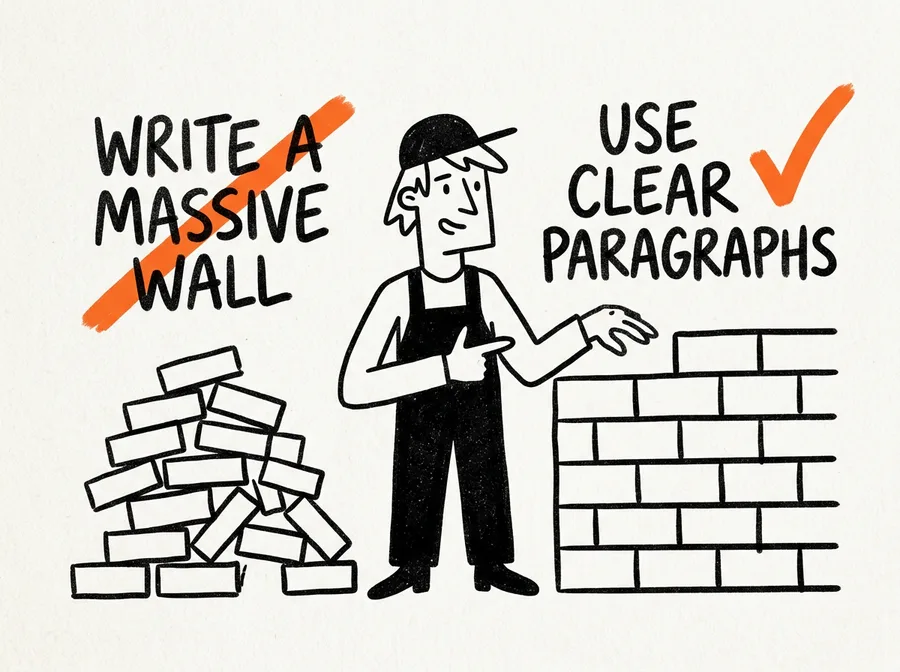
Chapter 4 · Start here
Writing Each Paragraph
Write strong introductions, topic sentences, body paragraphs and conclusions, one part at a time, instead of a memorised template.

Sprint 15
Write Strong Introductions
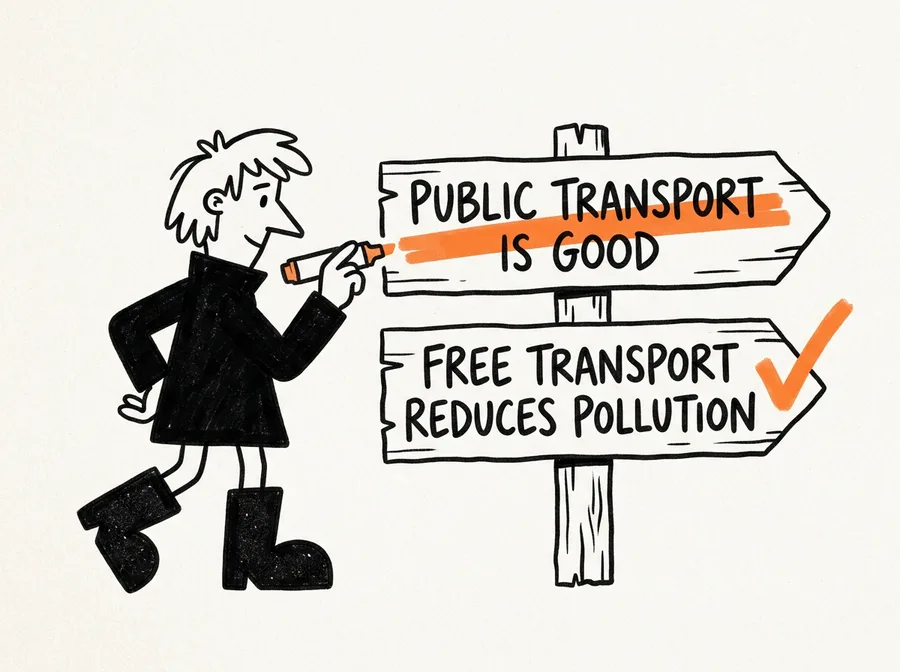
Learn to write an introduction that paraphrases the prompt and gives a clear position without unnecessary background.
Sprint 16
Write Topic Sentences
Understand and write topic sentences that act as the main claim controlling the paragraph.

Sprint 17
Build Body Paragraphs
Construct body paragraphs with clear movement: claim, explanation, evidence, and link.
Sprint 18
Write Clear Conclusions
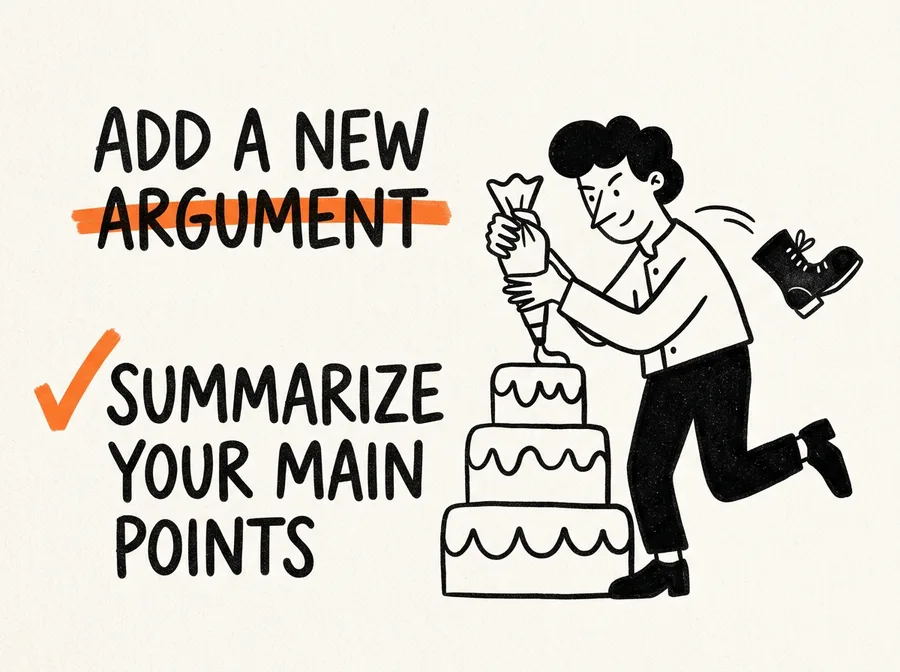
Write concise conclusions that restate the position and main reason without introducing new ideas.

Sprint 19
Review: Writing Each Paragraph
Review and synthesize paragraph mastery concepts including introductions, topic sentences, body paragraphs, and conclusions.
Making Your Essay Flow
Chapter 5
Chapter 5 · Start here
Making Your Essay Flow
Make your essay flow logically without leaning on linking words.

Sprint 20
Logical Flow Between Ideas
Organize ideas logically from prompt to conclusion so the reader never gets lost.

Sprint 21
Cohesion Without Overusing Linkers
Use reference words, repeated key nouns, and logical progression instead of just mechanical linking words.

Sprint 22
Paragraphing
Structure the essay into distinct paragraph blocks, each with one clear role.

Sprint 23
Referencing And Repetition
Maintain clarity through controlled repetition and clear reference chains.

Sprint 24
Review: Making Your Essay Flow
Synthesize and apply coherence and cohesion strategies to ensure logical flow in IELTS Task 2 essays.
Vocabulary Without Fake Phrases
Chapter 6
Chapter 6 · Start here
Vocabulary Without Fake Phrases
Choose accurate words that fit the topic, instead of memorised 'fancy' phrases.

Sprint 25
Topic Vocabulary That Fits
Learn to use topic-specific vocabulary accurately without memorised ornamentation.
Sprint 26
Collocation
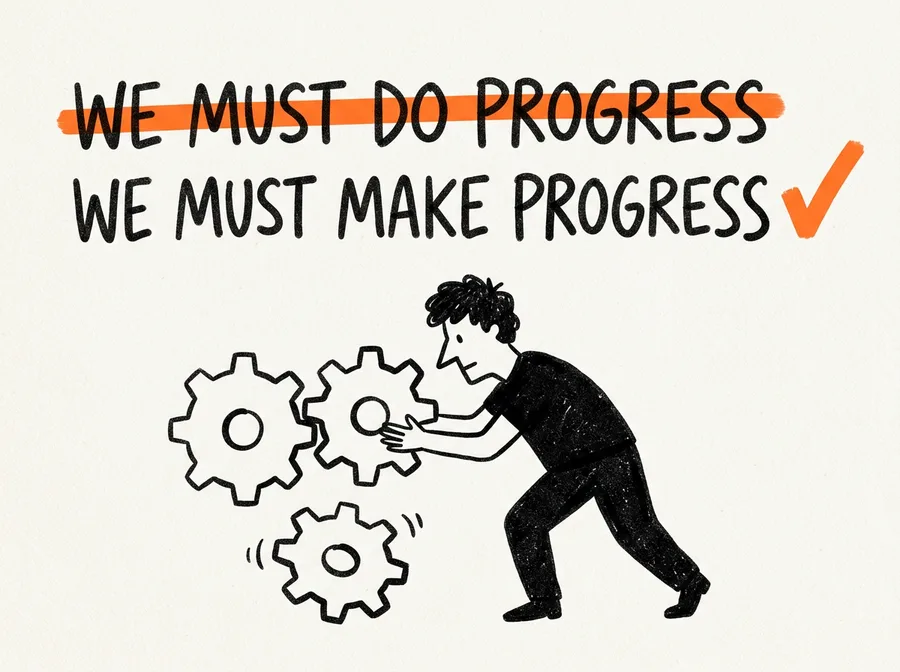
Understand and apply natural word partnerships (collocations) to improve lexical resource.

Sprint 27
Paraphrasing The Prompt
Learn to paraphrase prompts safely by changing structure rather than just swapping synonyms.

Sprint 28
Avoid Memorised High-Band Phrases
Identify and eliminate unnatural, memorised phrases that lower clarity and coherence.

Sprint 29
Review: Vocabulary Without Fake Phrases
Synthesise chapter concepts to ensure learners can use precise vocabulary, natural collocations, and safe paraphrasing.
Grammar You Can Control
Chapter 7
Chapter 7 · Start here
Grammar You Can Control
Use a range of grammar you can control, benchmarked to IELTS Band 6 to 7.5, without error-prone structures.

Sprint 30
Sentence Accuracy First
Identify and correct common sentence-level errors to establish a baseline of grammatical accuracy.

Sprint 31
Complex Sentences That Stay Clear
Construct clear, accurate complex sentences using subordinating conjunctions and relative clauses.

Sprint 32
Grammar For Comparison And Contrast
Master specific grammatical structures needed to compare and contrast ideas effectively in Task 2 essays.

Sprint 33
Grammar For Cause, Effect, And Condition
Use conditional and causal grammatical structures to develop logical arguments and explore consequences.

Sprint 34
Review: Grammar You Can Control
Synthesize chapter concepts to ensure learners can apply controlled grammatical range and accuracy in their writing.
Full Essay Practice
Chapter 8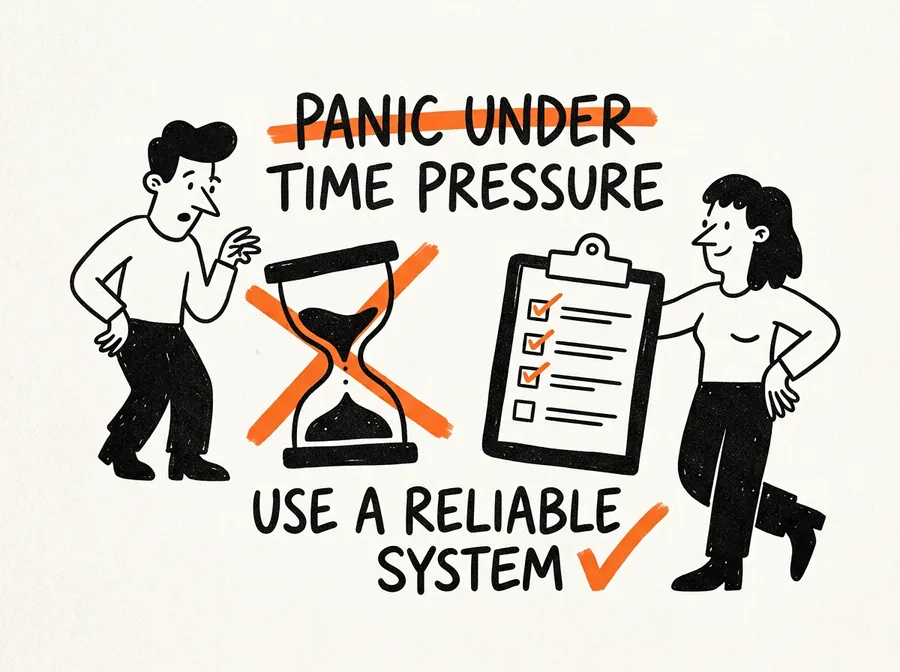
Chapter 8 · Start here
Full Essay Practice
Write complete, timed essays for each of the five common question types.

Sprint 35
Opinion Essay
Write a complete opinion essay that directly answers 'To what extent do you agree or disagree?' with a clear, sustained position.

Sprint 36
Discussion Essay
Write a balanced discussion essay that objectively covers both views before providing a clear personal opinion.
Sprint 37
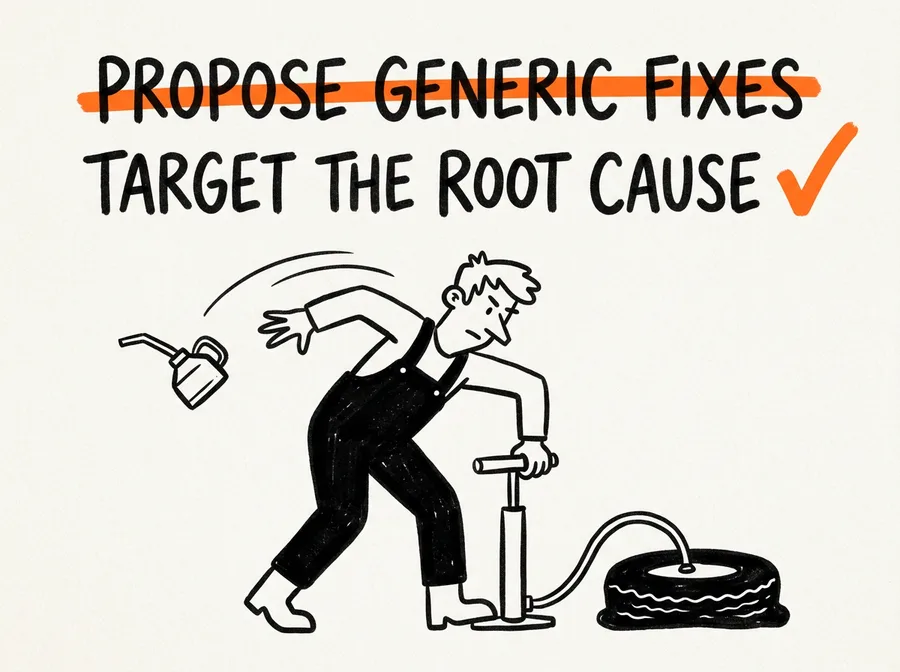
Problem-Solution Essay
Write a problem-solution essay with a clear, logical chain linking specific causes to relevant, actionable solutions.

Sprint 38
Advantages / Disadvantages Essay
Write an advantages/disadvantages essay that explicitly weighs which side is stronger, rather than just listing points.

Sprint 39
Two-Part Essay
Write a two-part essay that fully and equally addresses both distinct questions in the prompt.

Sprint 40
Review: Full Essay Execution
Synthesize the structural requirements of the five core IELTS Task 2 essay types and review strategies for full-essay execution.
Using Feedback To Rewrite
Chapter 9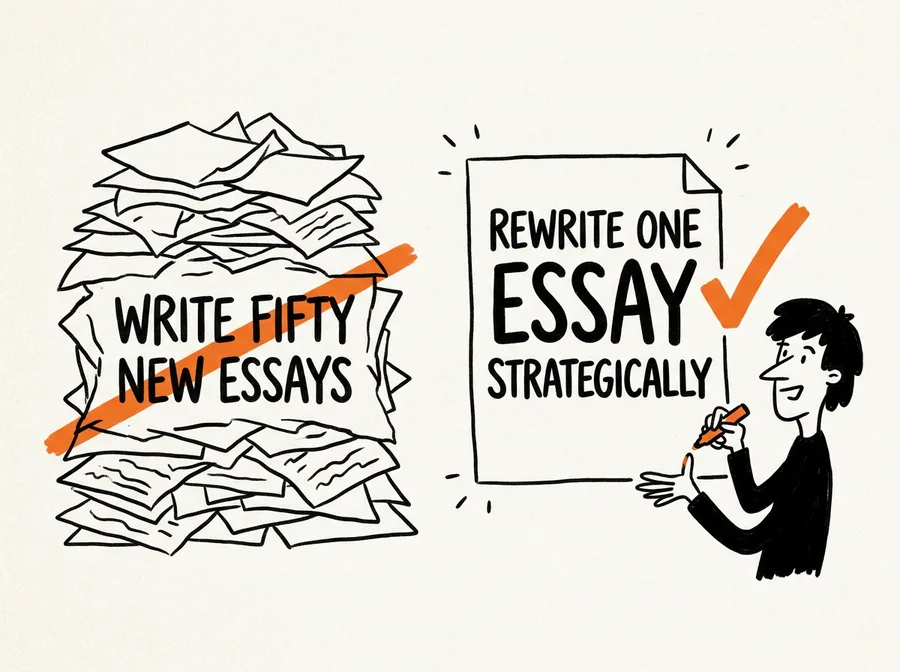
Chapter 9 · Start here
Using Feedback To Rewrite
Read your feedback and rewrite your essays step by step to raise your score.

Sprint 41
Understand Your Score Feedback
Interpret criterion-wise feedback to identify the highest-impact areas for improvement.
Sprint 42
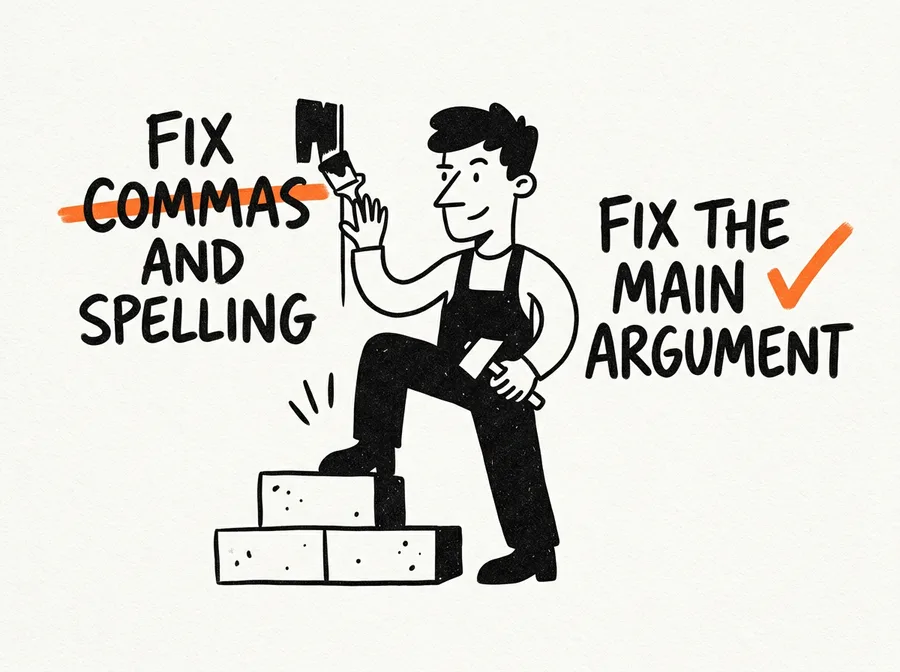
Rewrite For Task Response
Revise an essay's ideas and position to fully answer the prompt before fixing language errors.

Sprint 43
Rewrite For Coherence
Improve paragraph order, topic sentences, and logical flow to boost Coherence & Cohesion.

Sprint 44
Rewrite For Vocabulary And Grammar
Upgrade language precision and grammatical accuracy without altering the essay's core meaning.

Sprint 45
Your Personal Writing Routine
Synthesize the rewrite system into a personal, repeatable writing and review process.