Class 9–10 Academic Vocabulary: Words That Turn Answers Into Analysis
Your textbooks have levelled up, and your vocabulary needs to as well. In Class 6–8 you learned to name, describe and compare; now you need to analyse, evaluate, hypothesise, argue and critique. This course gives you the exact academic words that separate average exam answers from top-scoring ones, and trains you to use them precisely.
Analyse, Reason & Apply
Chapter 1
Chapter 1 · Start here
Analyse, Reason & Apply
Move from describing to thinking: the verbs for analysing, judging, hypothesising, applying and combining ideas.
Sprint 1
Analyse And Interpret
Describe, analyse, interpret or infer: which one a question wants, and how to do it with a text or data.
Sprint 2
Evaluate And Judge
Judge with evidence, not just opinion, using evaluate, justify and critique.
Sprint 3
Hypothesise And Speculate
A testable hypothesis versus a guess, in science and beyond.
Sprint 4
Apply And Implement
Verbs for turning what you know into action.
Sprint 5
Synthesise And Construct
Combine ideas from several sources into one clear argument or summary.
Sprint 6
Review: Analyse, Reason And Apply
Put the thinking verbs together and test yourself, from easy to hard.
Distinguish, Measure & Define
Chapter 2
Chapter 2 · Start here
Distinguish, Measure & Define
Words to tell things apart, measure them exactly, keep to what is relevant, and define the scope of a topic.
Sprint 7
Distinguish And Differentiate
Distinguish and differentiate, and the other words for telling things apart.
Sprint 8
Accurate And Precise
Accurate means close to the truth; precise means exact and consistent.
Sprint 9
Relevant And Valid
Keep what is relevant, and cut details that wander off the point.
Sprint 10
Abstract And Concrete
Abstract ideas versus concrete things, across your subjects.
Sprint 11
Scope And Extent
Words for the size, range and limits of a topic or an argument.
Sprint 12
Review: Distinguish, Measure And Define
Put the words for distinguishing, measuring and defining together, and test yourself.
Consequence, Transition & Sustain
Chapter 3
Chapter 3 · Start here
Consequence, Transition & Sustain
Words for consequences, the speed and direction of change, sustainability, and how systems work.

Sprint 13
Consequence And Repercussion
Direct consequences, knock-on effects and ripple effects.
Sprint 14
Gradual And Sudden Change
Words for how fast things change: exponential, gradual, levelling off.
Sprint 15
Emerge, Evolve, Decline
Words for which way things change: emerging, growing, declining, standing still.
Sprint 16
Sustain And Conserve
Conserve means use carefully; preserve means leave untouched. Plus words for running out and restoring.
Sprint 17
Mechanism And Phenomenon
What you can see happen versus the hidden process that causes it.
Sprint 18
Review: Consequence, Change And Sustainability
Put the change and consequence words together, and test yourself.
Argue, Critique & Persuade
Chapter 4
Chapter 4 · Start here
Argue, Critique & Persuade
Words to build an argument, answer one, spot bias, persuade, and admit a fair point.
Sprint 19
Assertion And Premise
The parts of an argument: the claim, the reasons behind it, and the main point.
Sprint 20
Refute And Rebut
Disagree with evidence, not just by contradicting.
Sprint 21
Bias And Objectivity
Spot bias in a text, and use words for judging whether a source is fair.
Sprint 22
Persuade And Convince
Persuading with feelings versus convincing with reasons.
Sprint 23
Concede And Qualify
Admit the other side's point and limit your claim, which makes an argument stronger.
Sprint 24
Review: Argue, Critique And Persuade
Put the argument words together, and test yourself.
Data, Method And Systems
Chapter 5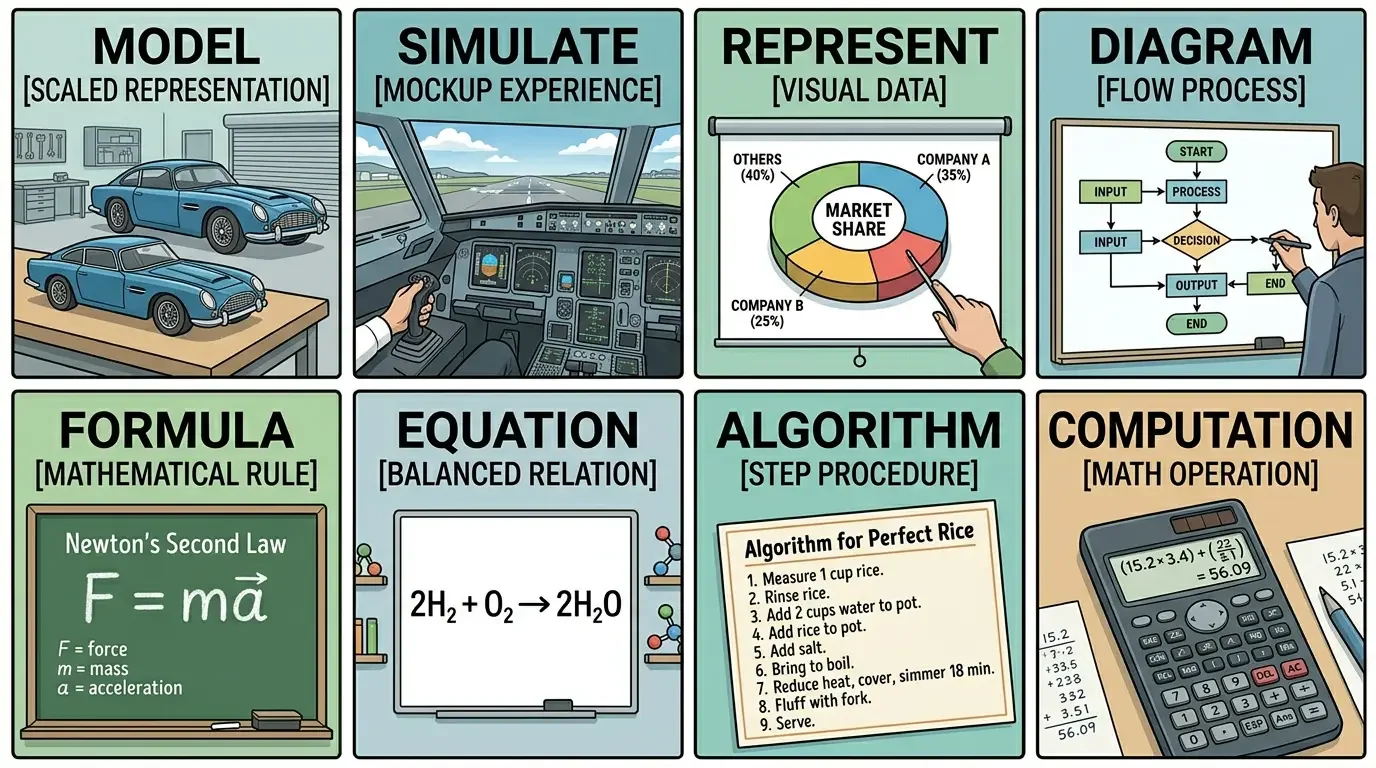
Chapter 5 · Start here
Data, Method And Systems
Words for experiments, numbers, models, trends and resources, so you can read data and explain it.
Sprint 25
Hypothesis And Experiment
Hypothesis, variable, control and trial: the words of an experiment.
Sprint 26
Quantify And Calculate
Turn what you observe into numbers, ratios and patterns.
Sprint 27
Model And Simulate
How models simplify the real world to predict what will happen.
Sprint 28
Trend And Anomaly
Spot the overall trend in data, and the results that don't fit.
Sprint 29
Resource And Sustainability
Words for resources, ecosystems and sustainable development.
Sprint 30
Review: Data, Method And Systems
Put the science, data and environment words together, and test yourself.
Narrative, Rhetoric And Character
Chapter 6
Chapter 6 · Start here
Narrative, Rhetoric And Character
Words for characters' motives, irony, atmosphere, archetypes and complex emotions in literature.
Sprint 31
Motive And Dilemma
Words for why characters act, and the hard choices they face.

Sprint 32
Irony And Satire
Irony, satire and sarcasm: when what is said differs from what is meant.

Sprint 33
Atmosphere And Tension
How writers build mood, suspense and hints of what is coming.
Sprint 34
Archetype And Allegory
Familiar character types and stories with a hidden meaning, in Indian and world literature.
Sprint 35
Emotion And Behaviour Nuance
Exact words for complicated feelings and behaviour.
Sprint 36
Review: Narrative, Rhetoric And Character
Put the literature and character words together, and test yourself.
Cohesion, Precision And Voice
Chapter 7
Chapter 7 · Start here
Cohesion, Precision And Voice
Words for linking ideas, choosing the right level of formality, and writing clear, flowing paragraphs.
Sprint 37
Emphasis And Contrast
Better words than also and but for emphasis and contrast.
Sprint 38
Transition And Sequence
Words that show when things happened and in what order.
Sprint 39
Condense And Elaborate
Know when to say more and when to say less, and avoid padding.
Sprint 40
Tone And Register
Choose the right level of formality for your reader.
Sprint 41
Coherence And Clarity
Check whether your writing flows and makes sense, not just whether the grammar is right.
Sprint 42
Review: Cohesion, Precision And Voice
Put the linking and style words together, and write a strong paragraph.