Why Do We Breathe?
Your cells are like tiny factories. They need fuel to work.
The Energy Problem
Cells break down glucose to get energy. This process needs oxygen . But there's a problem - it creates a harmful waste called carbon dioxide .
This section is still being documented. Clone the project to customize it or keep reading for context.
Part of NCERT 11 Biology
Essential concepts you should know before starting
Understanding why organisms need respiration
Your cells are like tiny factories. They need fuel to work.
Cells break down glucose to get energy. This process needs oxygen . But there's a problem - it creates a harmful waste called carbon dioxide .
Important words to understand this chapter
Key respiratory system terminology
Visual guide to respiratory structures
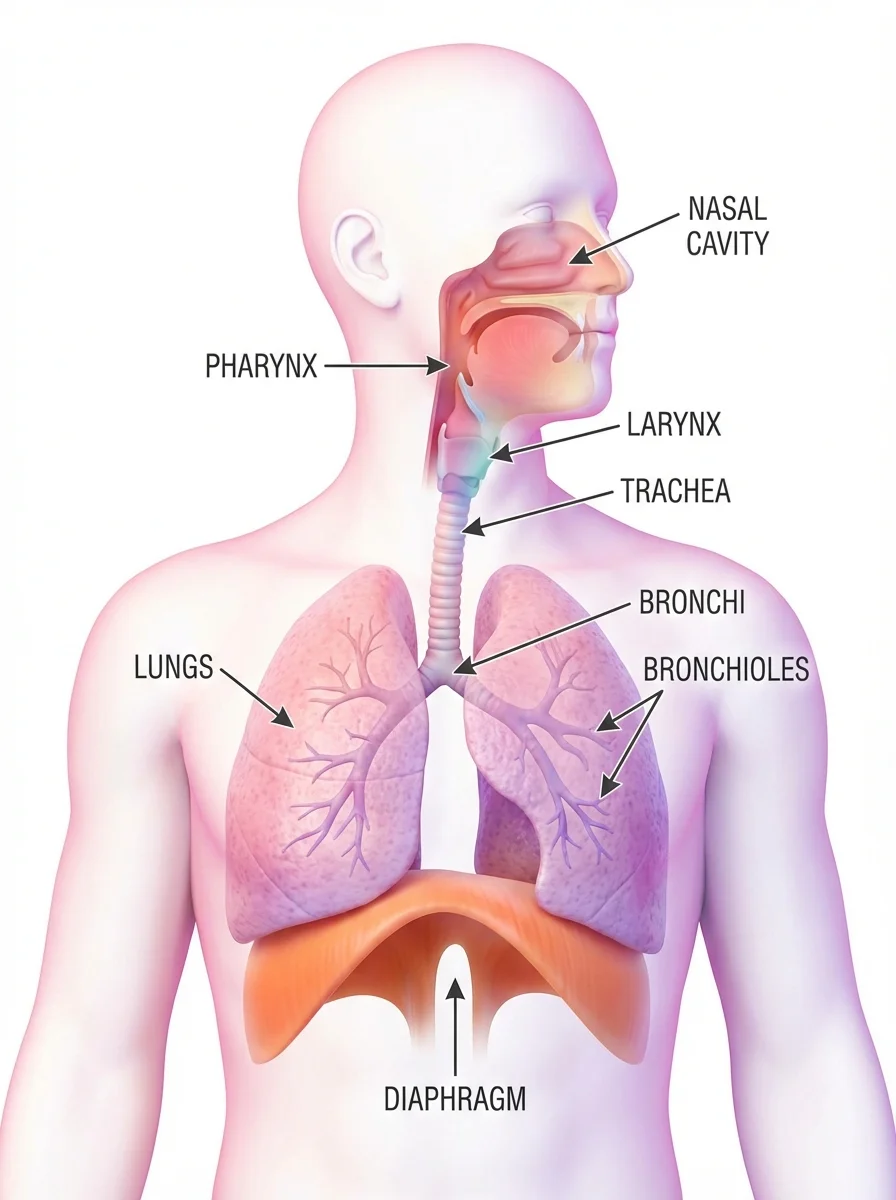
Notice how the airways branch like a tree. Air travels from the single trachea to millions of alveoli.
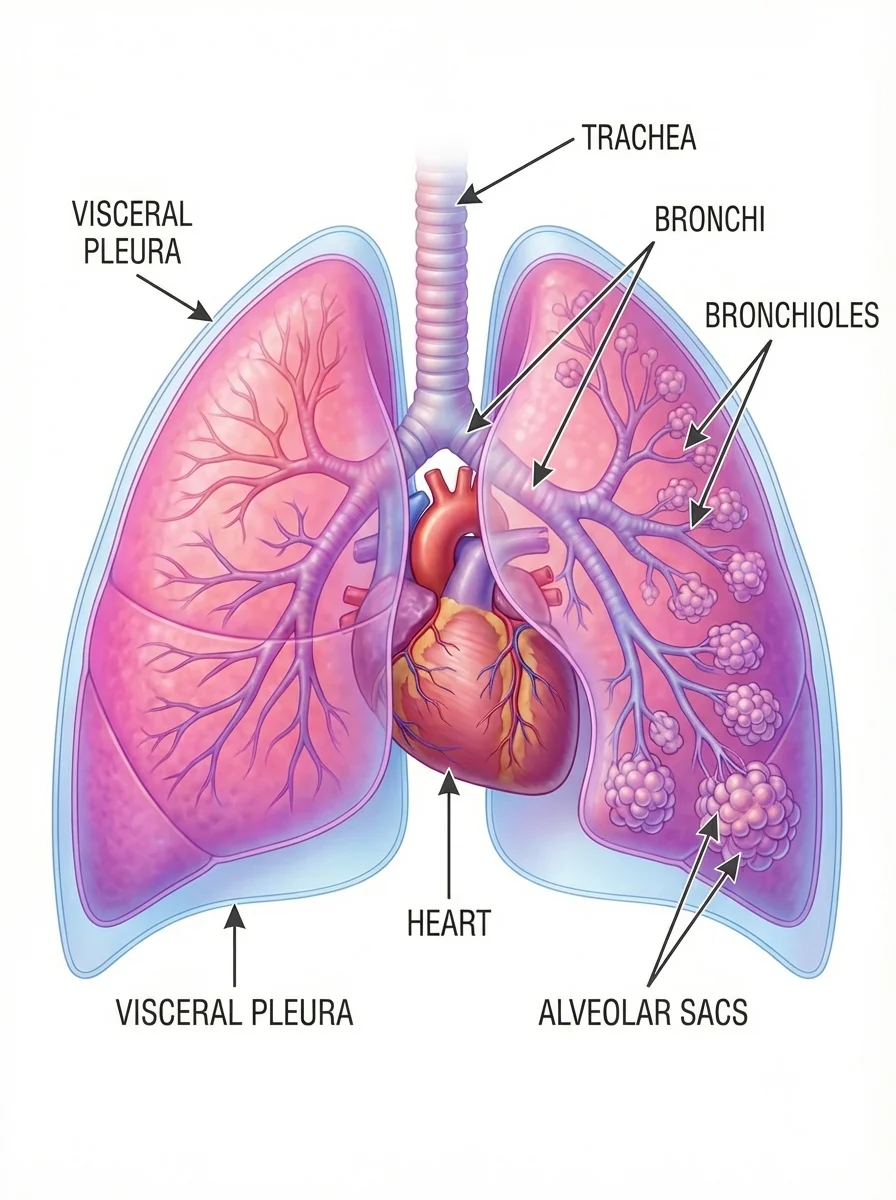
See the branching network? The bronchi divide into smaller and smaller tubes. The pleural membranes wrap around each lung.
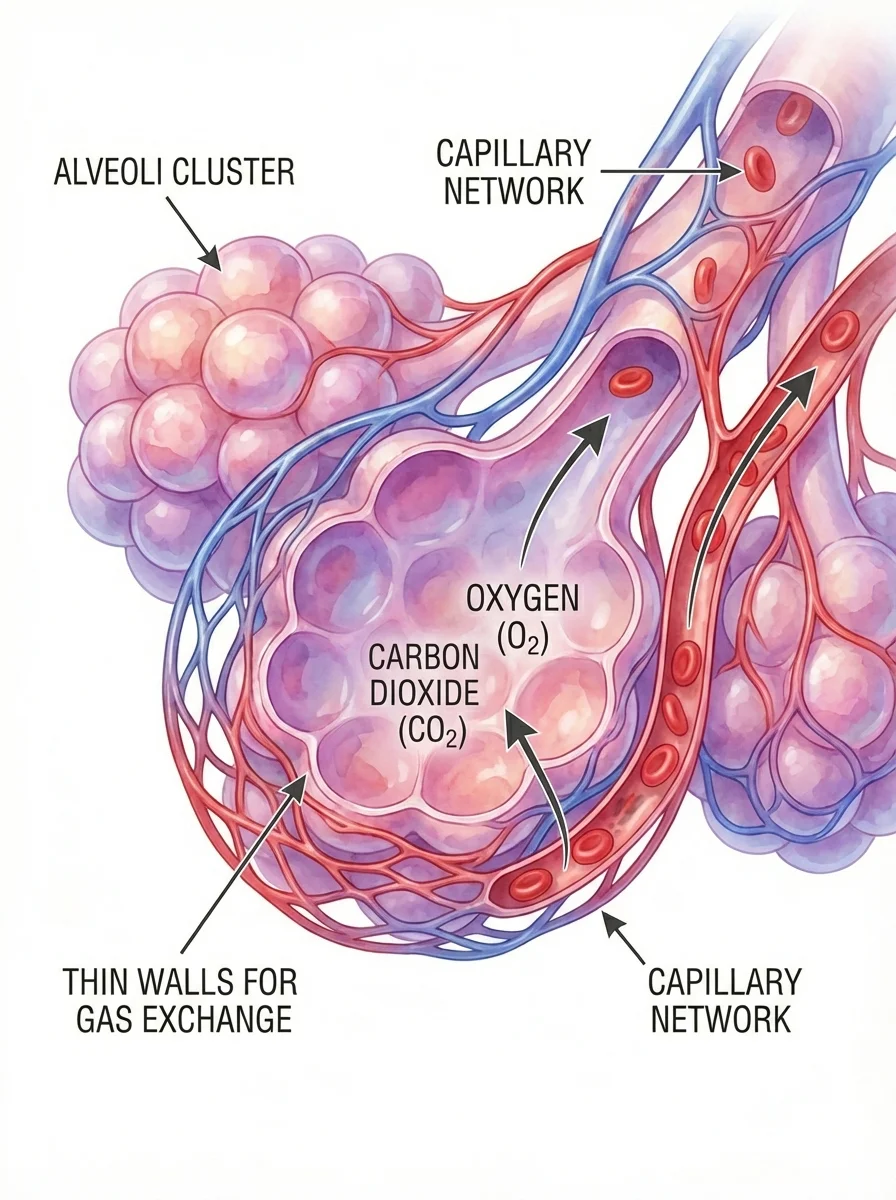
These tiny sacs are wrapped in blood vessels. The walls are so thin that oxygen and CO₂ can pass through easily.
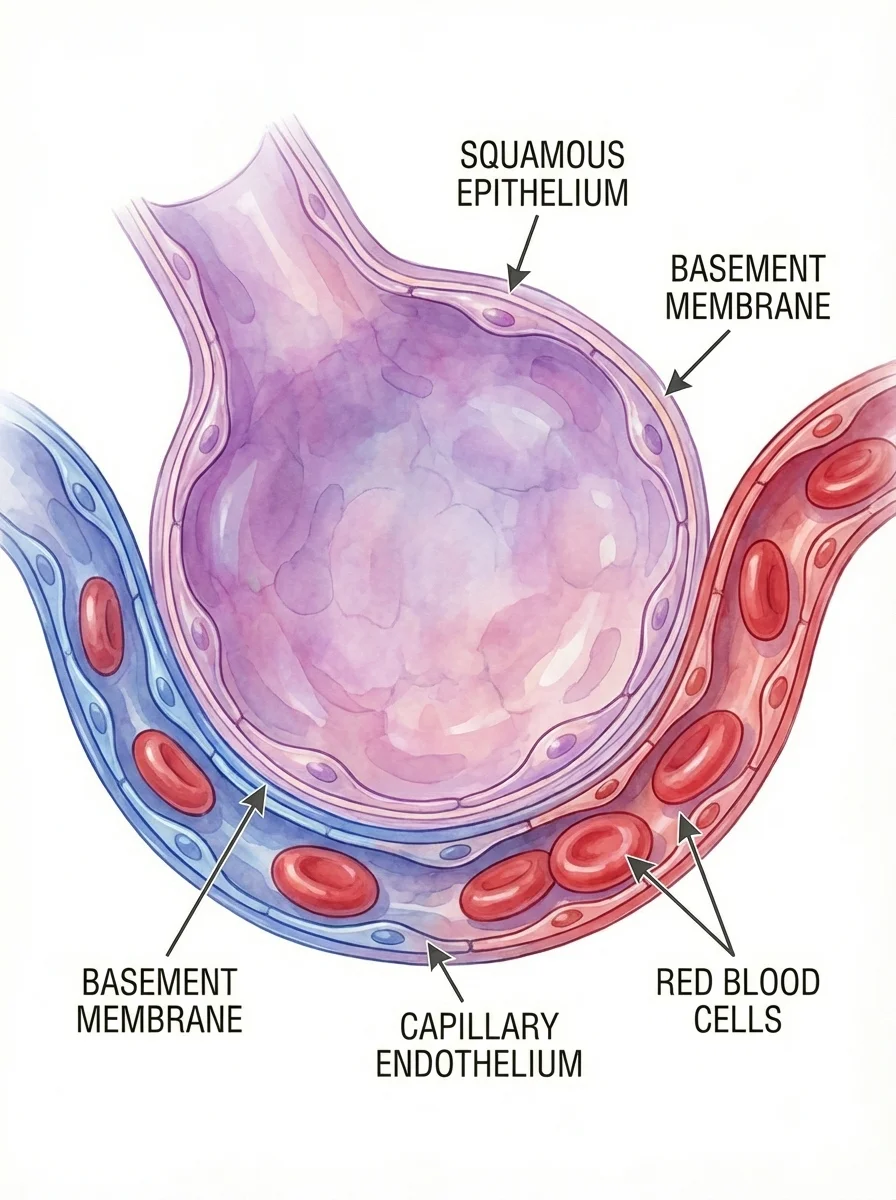
Three layers separate air from blood: (1) Alveolar wall (one cell thick), (2) Basement membrane (very thin), (3) Capillary wall (one cell thick). Total thickness: Less than 1 millimeter!
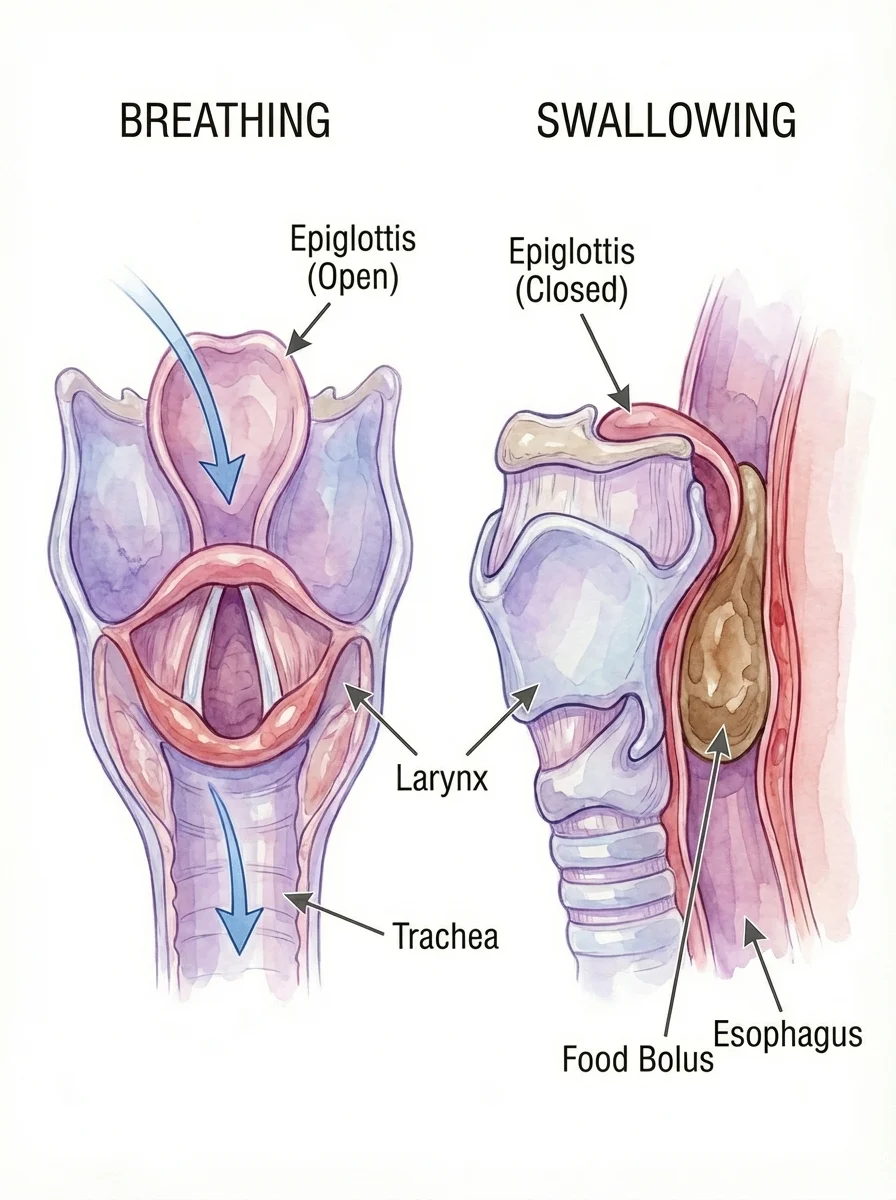
During breathing: Epiglottis is open, air flows to trachea. During swallowing: Epiglottis closes, food goes to esophagus.
Structure and organization of respiratory organs
Let's follow the path air takes through your body:
Air enters through your nose. The nostrils lead to the nasal chamber.
What happens here:
How inspiration and expiration work
Breathing works on a simple rule:
Air moves from HIGH pressure to LOW pressure
Your body creates pressure differences to move air in and out.
Stage 1: Inspiration (Breathing IN)
Goal: Make pressure inside lungs LESS than outside air
Stage 2: Expiration (Breathing OUT)
Goal: Make pressure inside lungs MORE than outside air
See how breathing works step by step
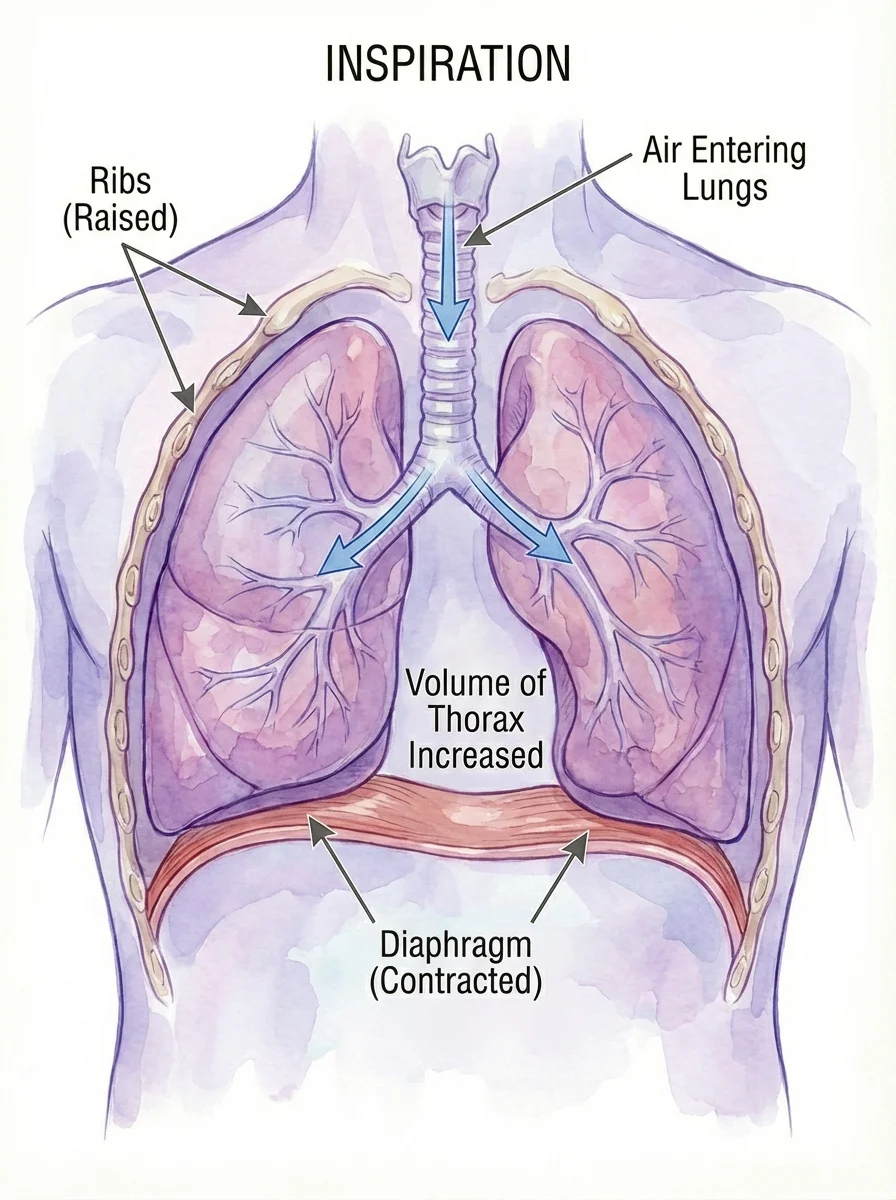
Diaphragm contracts and flattens. Ribs move up and out. Chest cavity expands. Pressure drops. Air flows IN.
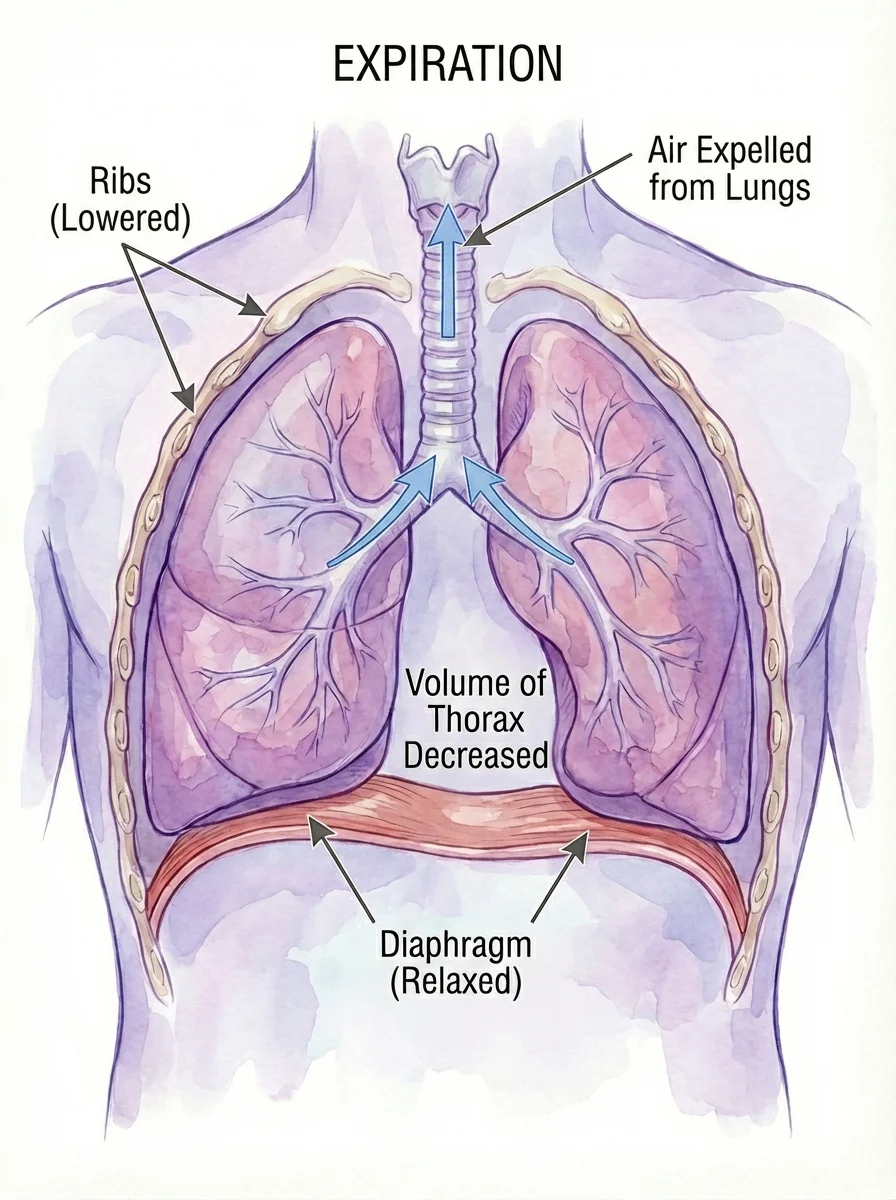
Diaphragm relaxes and domes up. Ribs move down and in. Chest cavity shrinks. Pressure rises. Air flows OUT.
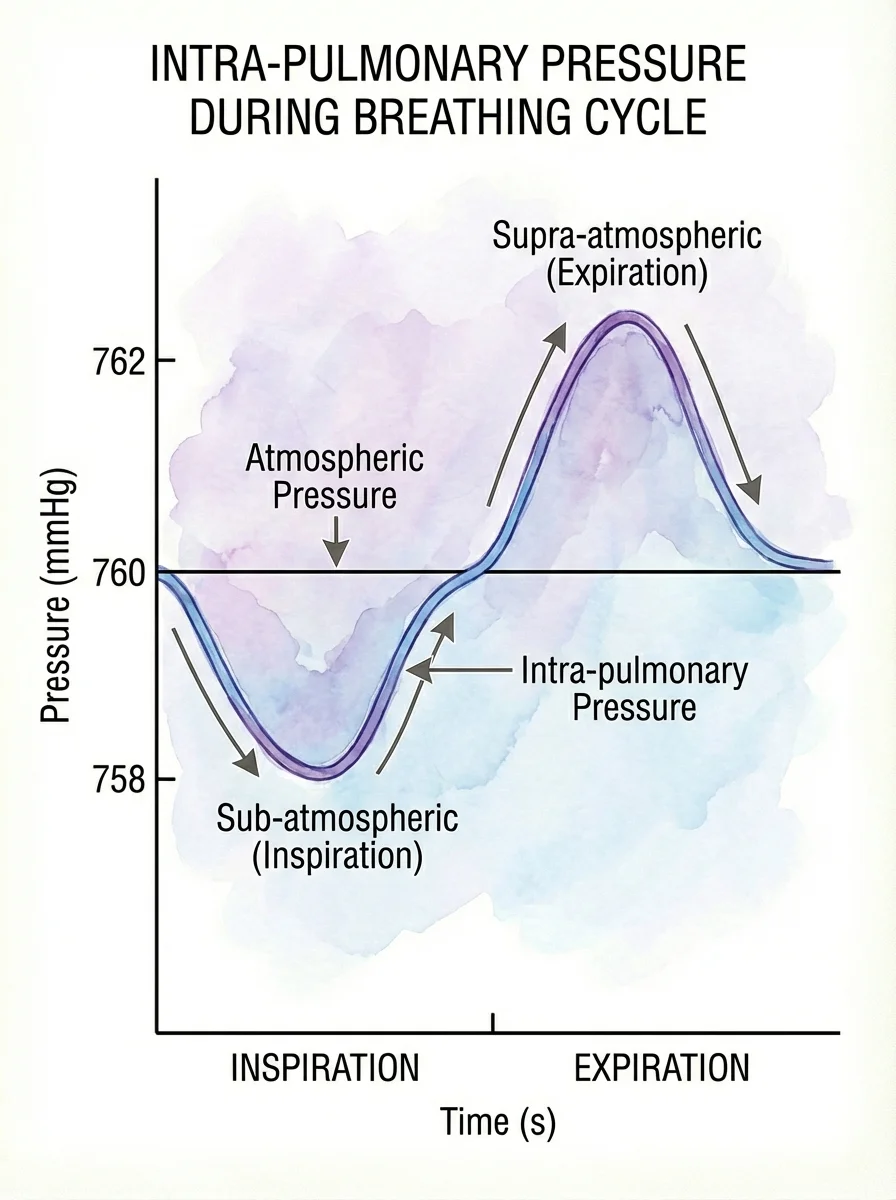
During inspiration, lung pressure drops below atmospheric. During expiration, it rises above atmospheric.
Understanding lung volume measurements
Different activities use different amounts of air. Scientists measure these volumes using a device called a spirometer.
What is it: Air you breathe in OR out during normal, quiet breathing
Amount: (about half a liter)
Example: Right now, as you sit reading this, each breath moves about 500 mL of air.
Per minute:
Visual representation of lung volumes
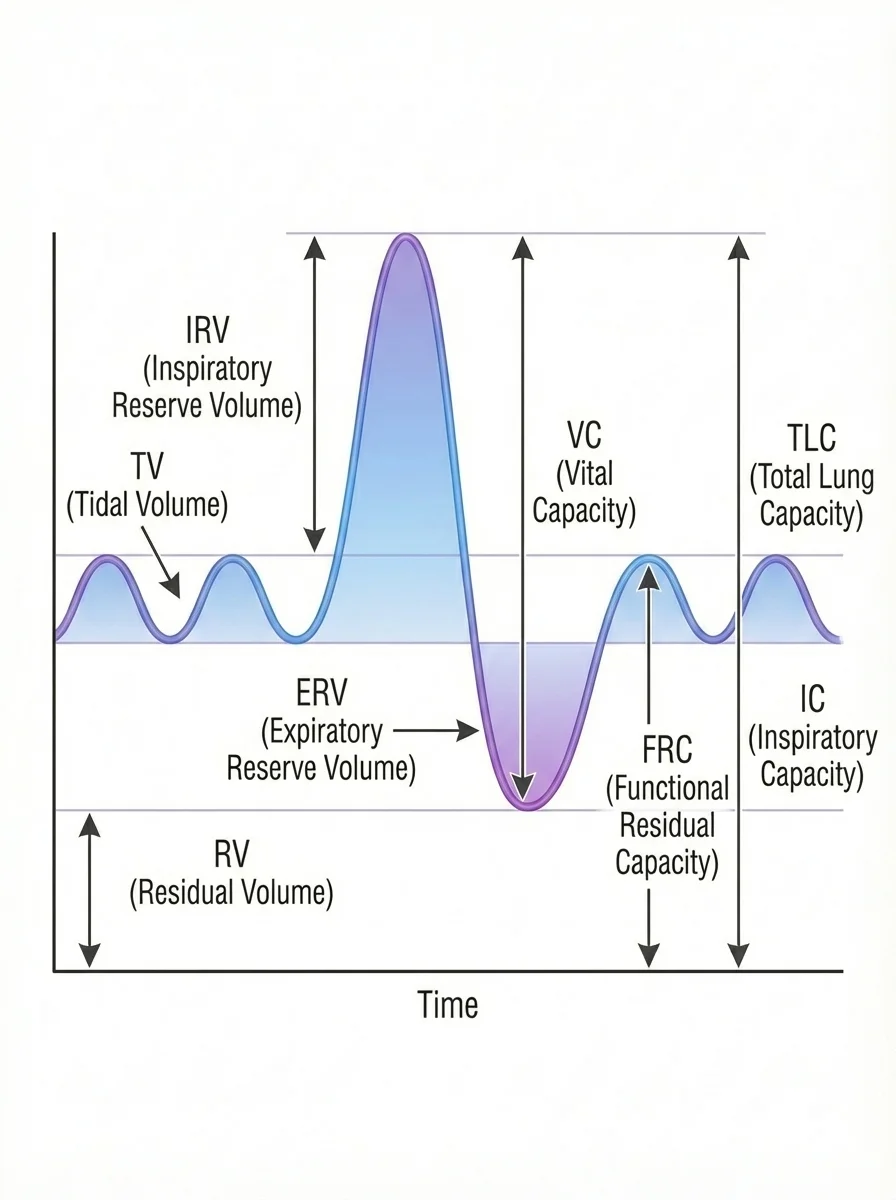
This graph shows how different volumes and capacities relate to each other. Notice how VC excludes RV, but TLC includes everything.
Test your understanding of lung volumes
A healthy person breathes normally 15 times per minute. If their tidal volume is 500 mL, how much air do they breathe per minute?
How O₂ and CO₂ move between lungs, blood, and tissues
Gas exchange occurs at TWO places:
Gases move by simple diffusion - from high concentration to low concentration.
No energy needed. No pumps required. Just natural movement.
Air is a mixture of gases. Each gas pushes with its own pressure.
Partial pressure = the pressure of one gas in a mixture
Key Rule: Gases diffuse from HIGH partial pressure to LOW partial pressure.
See how gases move at alveoli and tissues
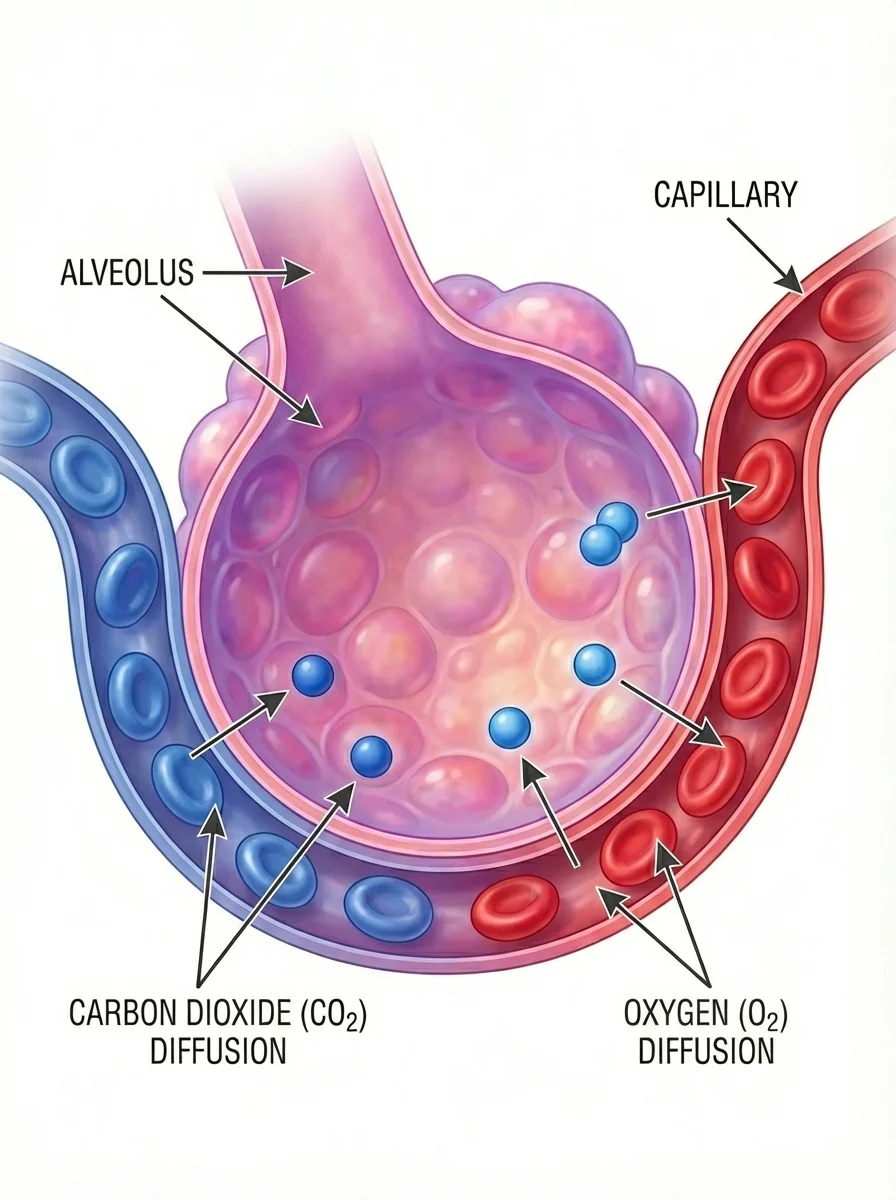
O₂ moves from alveolar air (pO₂=104) into blood (pO₂=40). CO₂ moves from blood (pCO₂=45) into alveolar air (pCO₂=40). Arrows show direction based on pressure gradients.
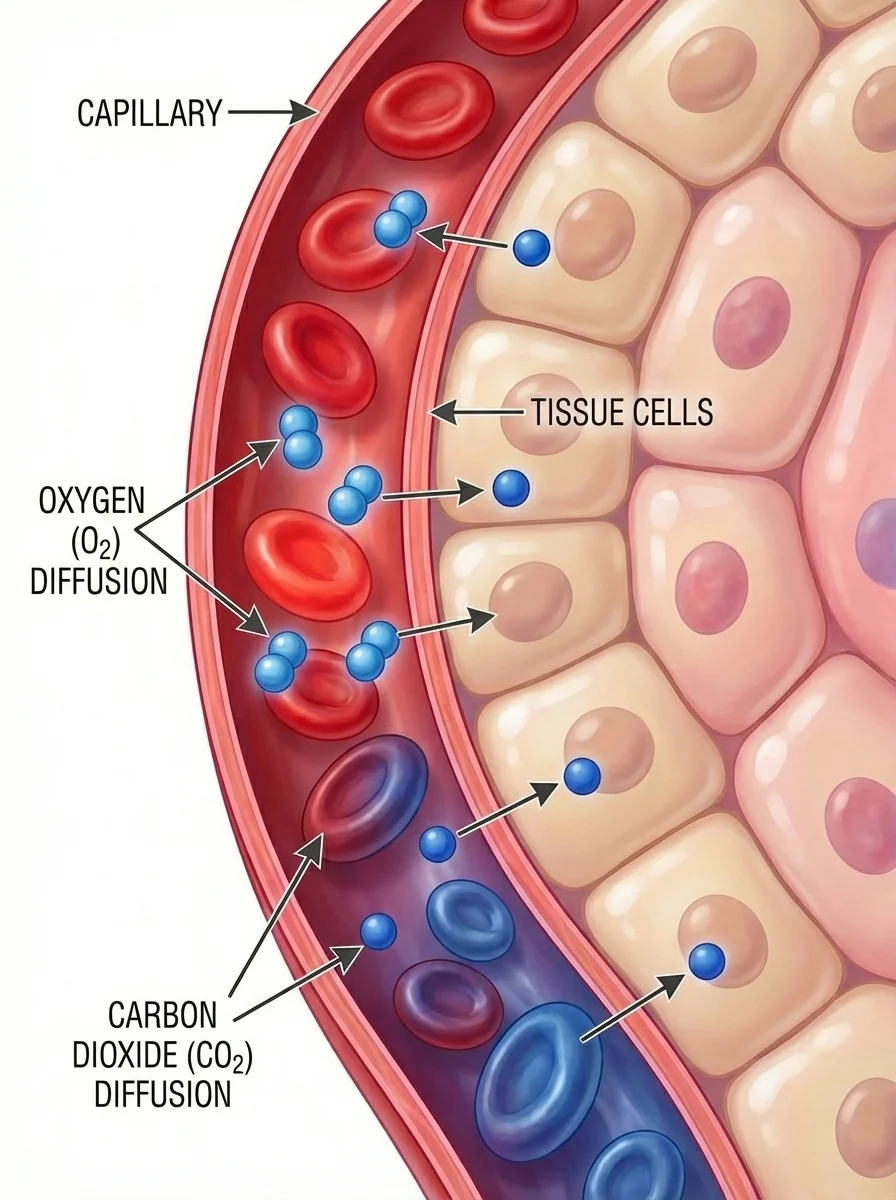
O₂ leaves blood (pO₂=95) and enters cells (pO₂=40). CO₂ leaves cells (pCO₂=45) and enters blood (pCO₂=40). The opposite of what happens at alveoli!
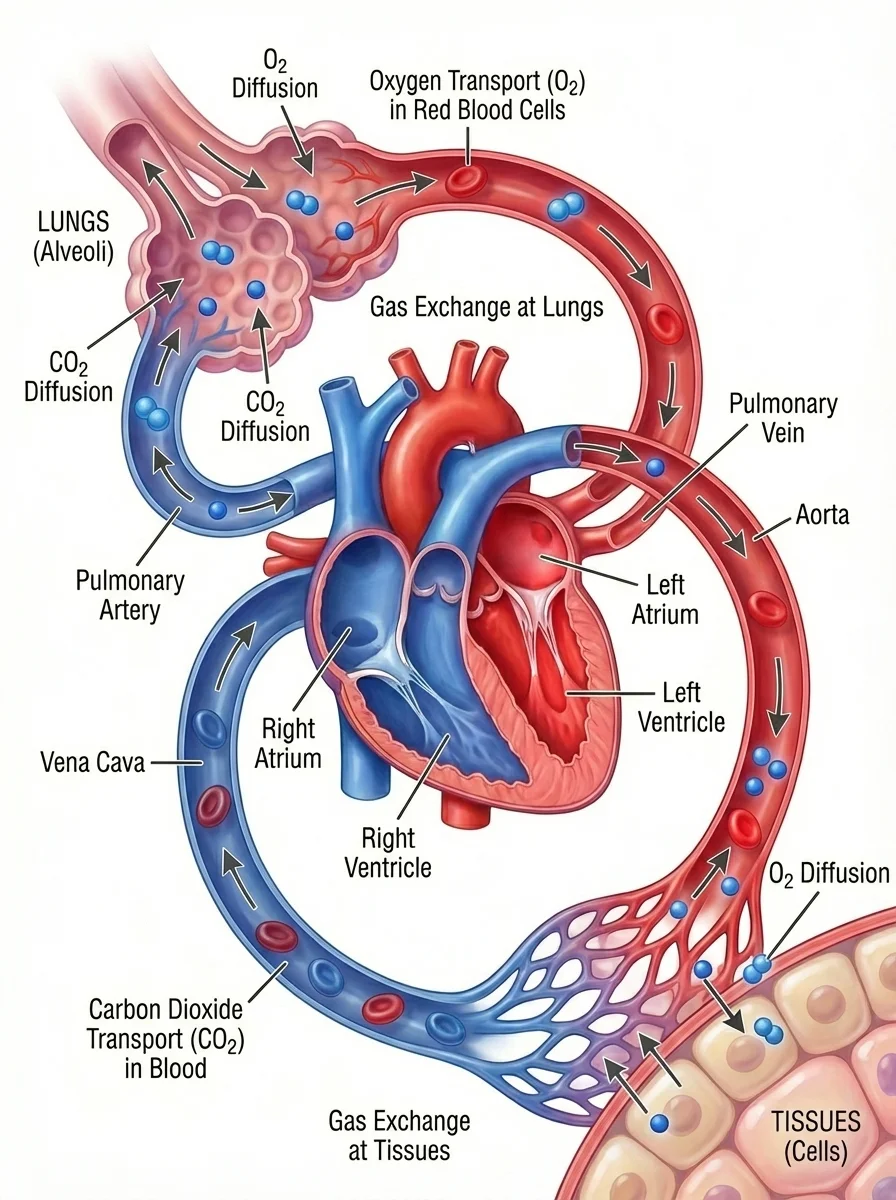
Follow the journey: Alveoli → Pulmonary vein → Heart → Systemic arteries → Tissues → Systemic veins → Heart → Pulmonary artery → Alveoli.
Explain the concept in your own words
Imagine you're teaching a classmate who missed today's lesson. Write a brief explanation of:
Use simple language. Include the partial pressures if you remember them.
Write 100-500 characters explaining the concept
How blood carries O₂ and CO₂
Gases need to travel between lungs and tissues. Blood is the transport vehicle.
How is O₂ Carried?
Two ways:
Clearly, hemoglobin does most of the work!
What is it:
Capacity: Each hemoglobin can bind 4 oxygen molecules
Reversible binding:
The symbol means it can go both ways:
Understanding the dissociation curve
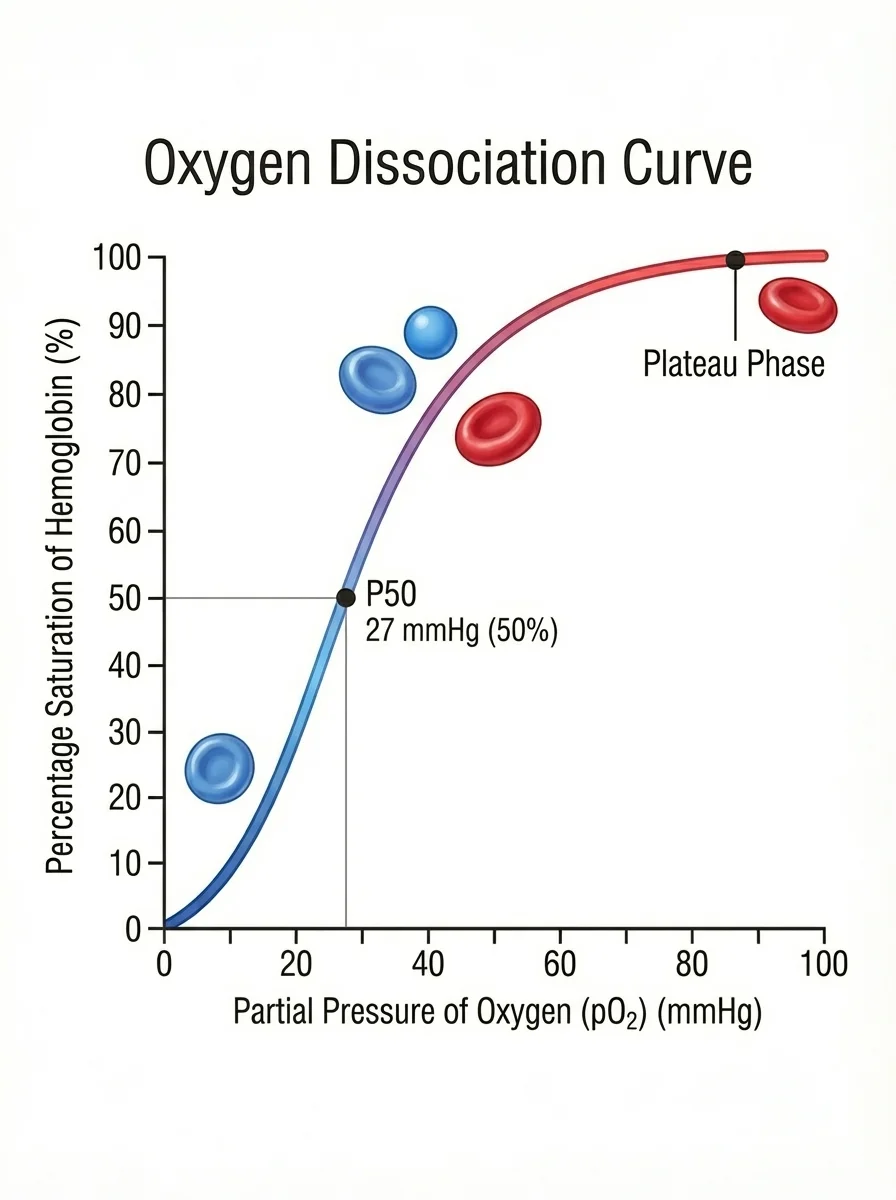
At lungs (pO₂ = 95-100 mm Hg), Hb is ~97% saturated. At tissues (pO₂ = 40 mm Hg), Hb is ~75% saturated. The S-shape shows cooperative binding - once one O₂ binds, others bind more easily.
Test your understanding of O₂ and CO₂ transport
What percentage of oxygen is transported by hemoglobin in the blood?
How your brain controls breathing
You don't think about breathing. It happens automatically. But you CAN control it when you want.
How?
Location: Medulla oblongata (lower part of brain)
Job: Sets the basic breathing rhythm
How it works:
Location: Pons (above medulla)
Job: Fine-tunes breathing
How it works:
Common diseases and prevention
What happens:
Symptoms:
Triggers:
Treatment:
Comprehensive test covering all topics in respiratory system
Why is the diffusion of CO₂ efficient despite having a smaller pressure gradient than O₂?