5a86752a...
709937fe...
c4928dd5...
English Vocabulary
Important words to understand this chapter
1 / 0
c37d0420...
7f1c1276...
167a773e...
72d4d46e...
Preview · progress not saved — Chapter 1 is free
Important words to understand this chapter
Essential concepts you should know before starting
Understanding why organisms need respiration
Your cells are like tiny factories. They need fuel to work.
Cells break down glucose to get energy. This process needs oxygen . But there's a problem - it creates a harmful waste called carbon dioxide .
Key respiratory system terminology
Visual guide to respiratory structures
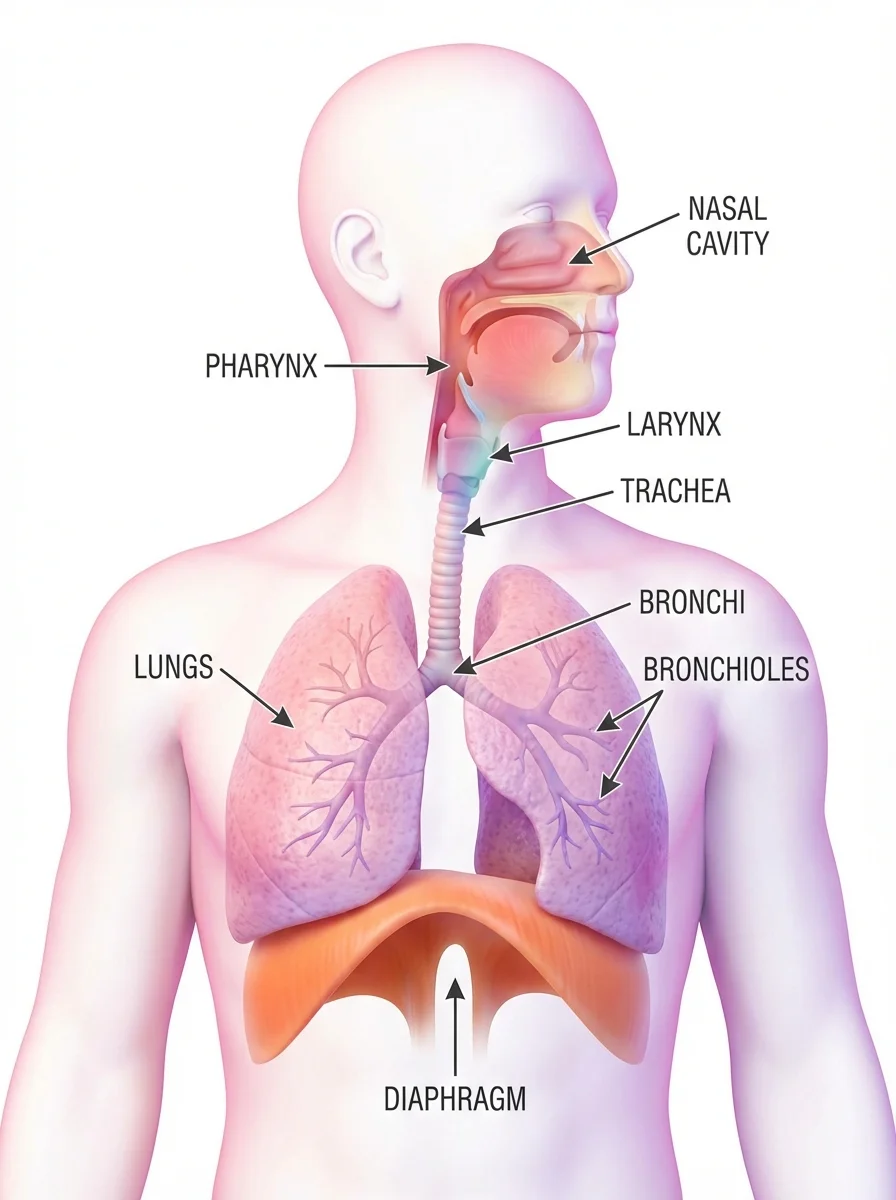
Notice how the airways branch like a tree. Air travels from the single trachea to millions of alveoli.
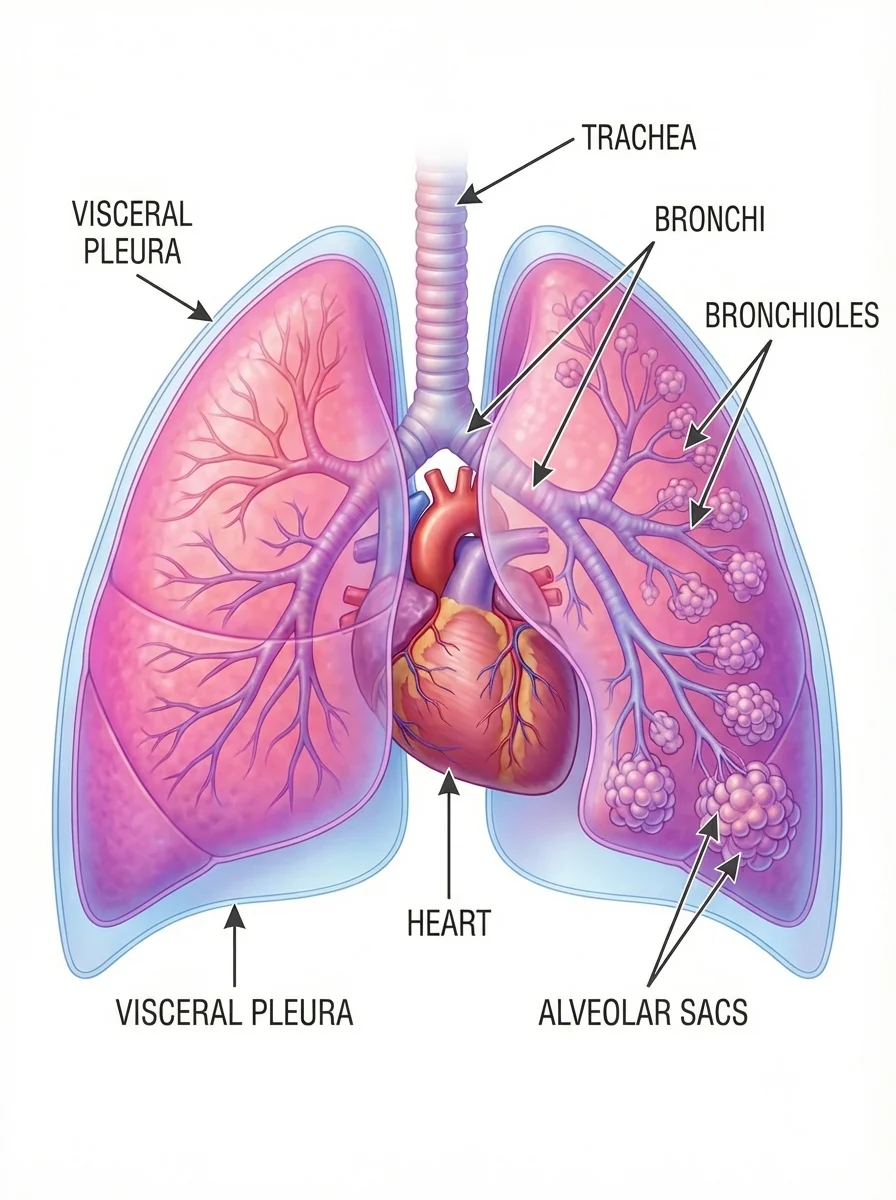
See the branching network? The bronchi divide into smaller and smaller tubes. The pleural membranes wrap around each lung.
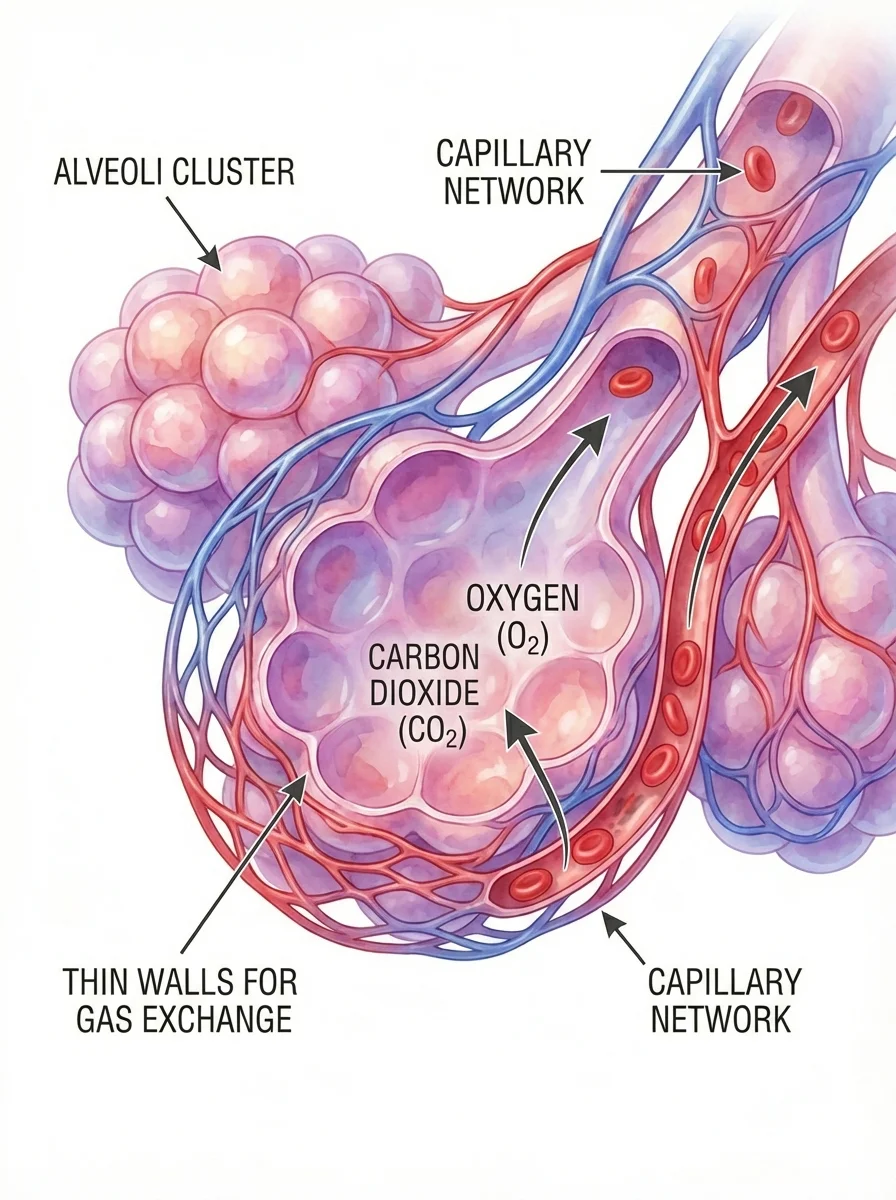
These tiny sacs are wrapped in blood vessels. The walls are so thin that oxygen and CO₂ can pass through easily.
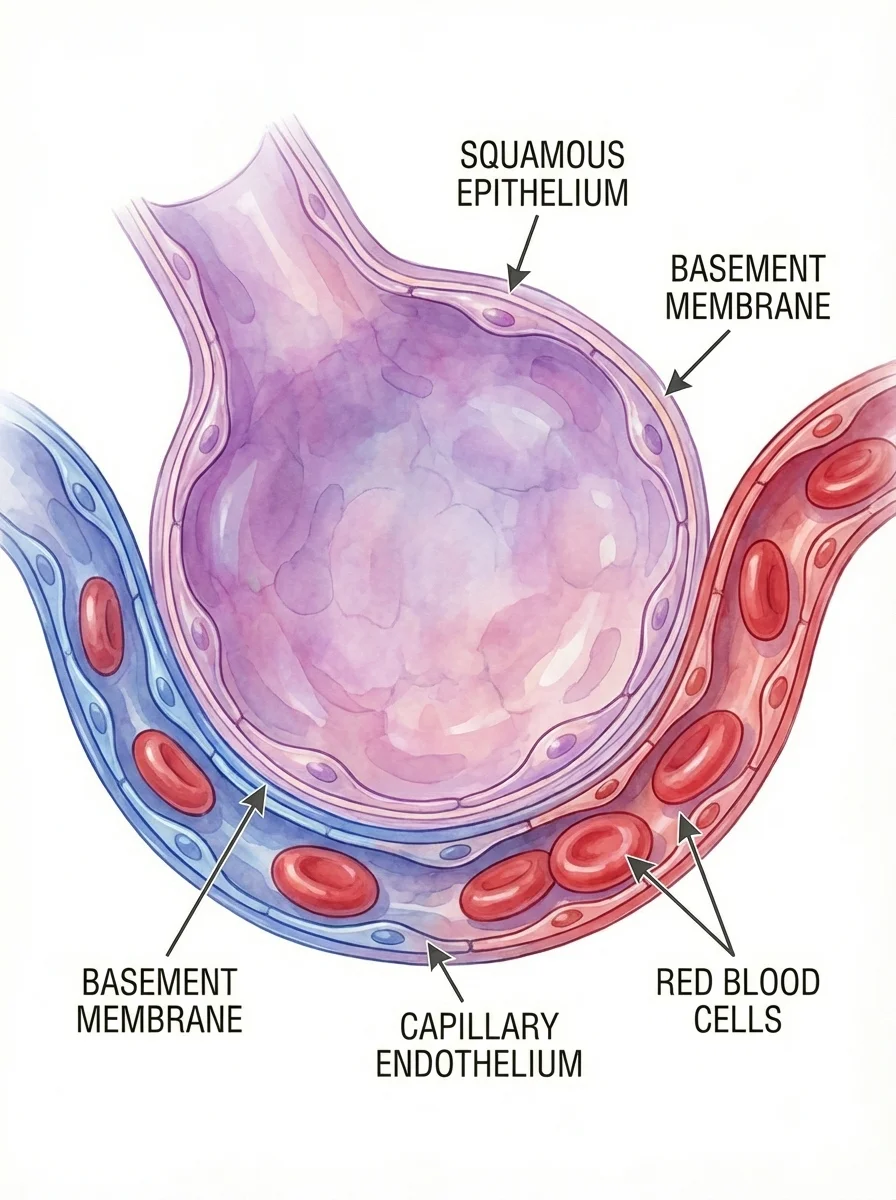
Three layers separate air from blood: (1) Alveolar wall (one cell thick), (2) Basement membrane (very thin), (3) Capillary wall (one cell thick). Total thickness: Less than 1 millimeter!
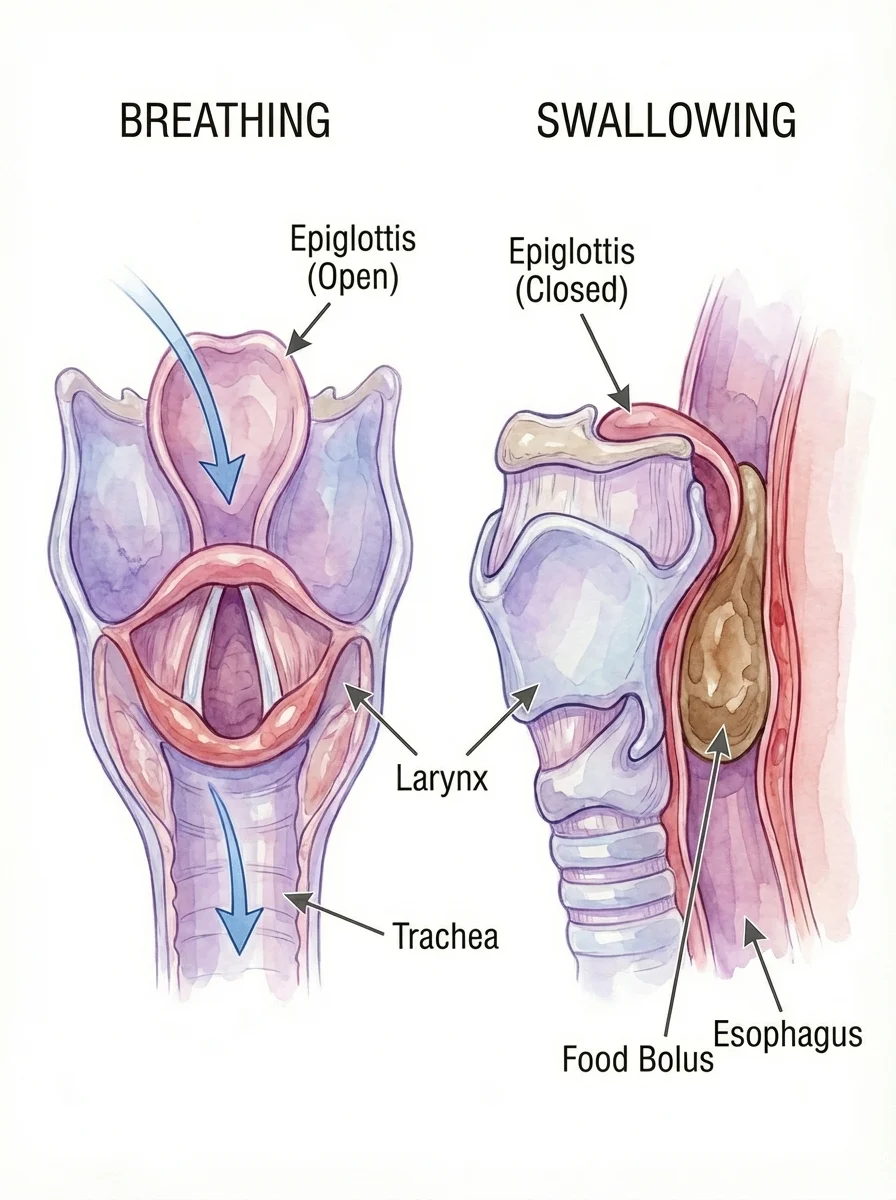
During breathing: Epiglottis is open, air flows to trachea. During swallowing: Epiglottis closes, food goes to esophagus.
Structure and organization of respiratory organs
Let's follow the path air takes through your body:
Air enters through your nose. The nostrils lead to the nasal chamber.
What happens here:
How inspiration and expiration work
Breathing works on a simple rule:
Air moves from HIGH pressure to LOW pressure
Your body creates pressure differences to move air in and out.
Stage 1: Inspiration (Breathing IN)
Goal: Make pressure inside lungs LESS than outside air
Stage 2: Expiration (Breathing OUT)
Goal: Make pressure inside lungs MORE than outside air